The First Tolled Highway In The Country

To tell the story of Federal Route 1, one must note the historical significance of this segment of the route.

Not many will remember, care or even know this. The first tolled highway wasn’t the North-South Expressway. It was this road between Tanjung Malim, Behrang and Slim River.

Built in 1966, the toll booths collected 50 sen from cars. The amount was a lot during its time and it was also perceived by many as mere widening and straightening of the existing Federal Route 1.

The Slim River Highway was indeed a very modest highway, especially when you are now comparing it with today’s 8-lane expressways. Still, in its time, it was an improvement over the nightmarish narrow and winding road that was crowded out by heavy vehicles.

Toll collection stopped in 1994 with the opening of the North-South Expressway.

Sony Alpha a7R, ISO 125, f13, 1/250 sec.

RGB – Red Green Blue

A red hibiscus in front of the blue mosque in Bandar Behrang 2020.

Lofty name notwithstanding, Behrang 2020 is one big housing estate that is as drab as the weather today. From a photography perspective, it is as boring as any such planned township can get.

Maybe I expected more from the name. Fortunately, the mosque, religious school and flowers at the entrance added some colours.

From here, I will be moving north again, after spending considerable time at Behrang town and villages. Those old places possess an ingredient that is usually missing in a systematically created town: character.

Sony Alpha a7R, ISO 100, f4, 1/2000 sec.

A Ghost Station For A Ghost Train?

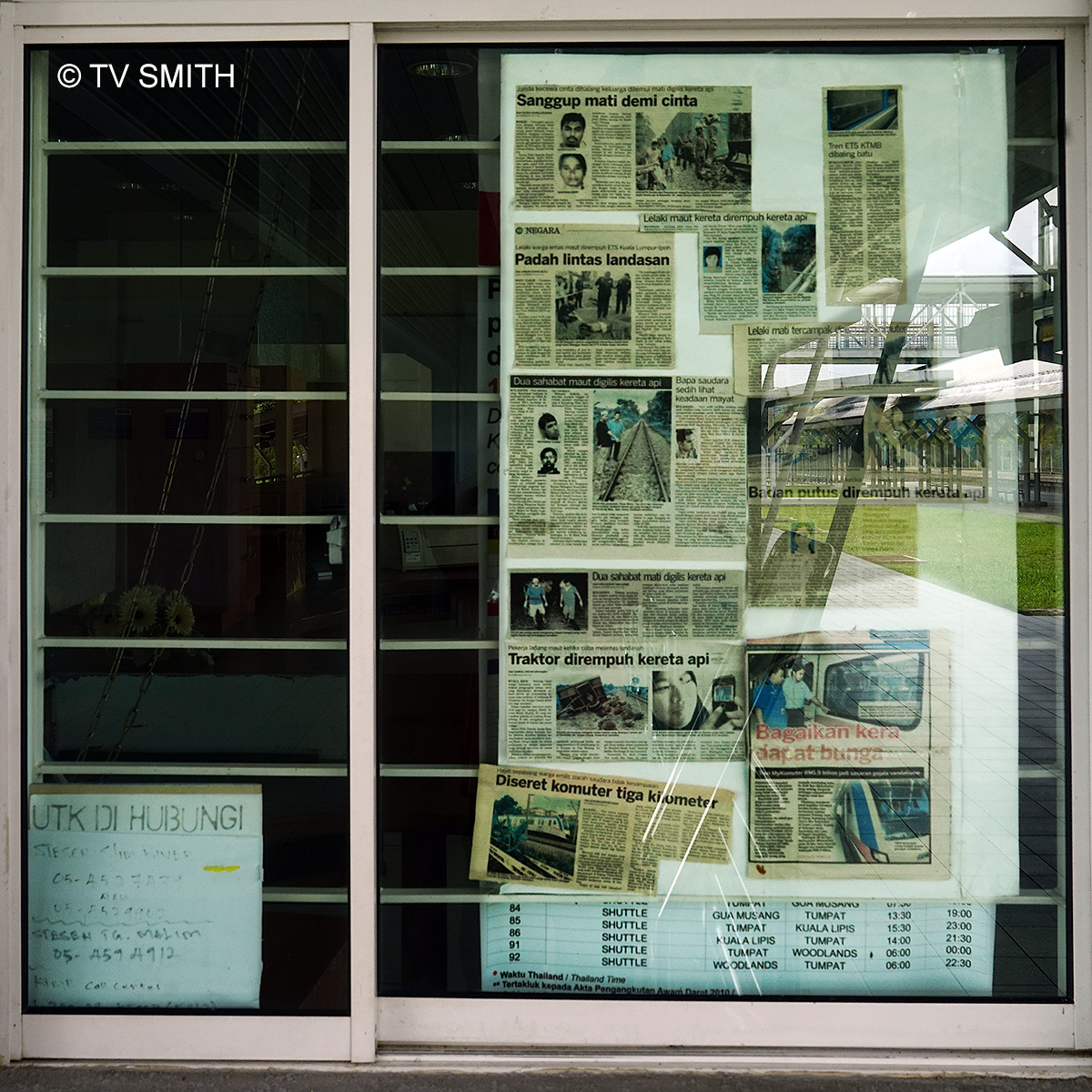
The permanently-closed ticketing counter at the Behrang Train Station is plastered with newspaper cuttings. A collection of morbid news on fatal accidents and suicides involving people on the railway track. It is to serve as a warning, perhaps. For there is open access to the platform and track.

The silence and emptiness is strangely attractive. It was as though me and my new friend, the invigorated cat, own the station. We wandered on the platform, looked at the tracks up-close, sat on a steel bench and waited for the train that never came.

I found out later from local residents that in spite the solitude, the station is functioning. One can still hop on a train from here, I was told. Provided someone on board is getting down, the train will stop.

The info left me with more questions. How does one disembark at the destination when boarding without a ticket? How would they know which station you board from?

How does a passenger from inside stop the speeding train in order to get down. Is there a bell button to push like buses of old days? From the platform, can I flag it to stop?

This is a nice and well-equipped modern train station, mind you. It is sad and surprising to see it so under-utilised. To the town’s credit, it isn’t vandalised at all. It also makes sense to not waste money on staff when there are hardly any passenger.

I don’t know. When it comes to train stations in small towns, the old adage of “if it ain’t broke, don’t fix it or re-locate it” applies, sometimes.

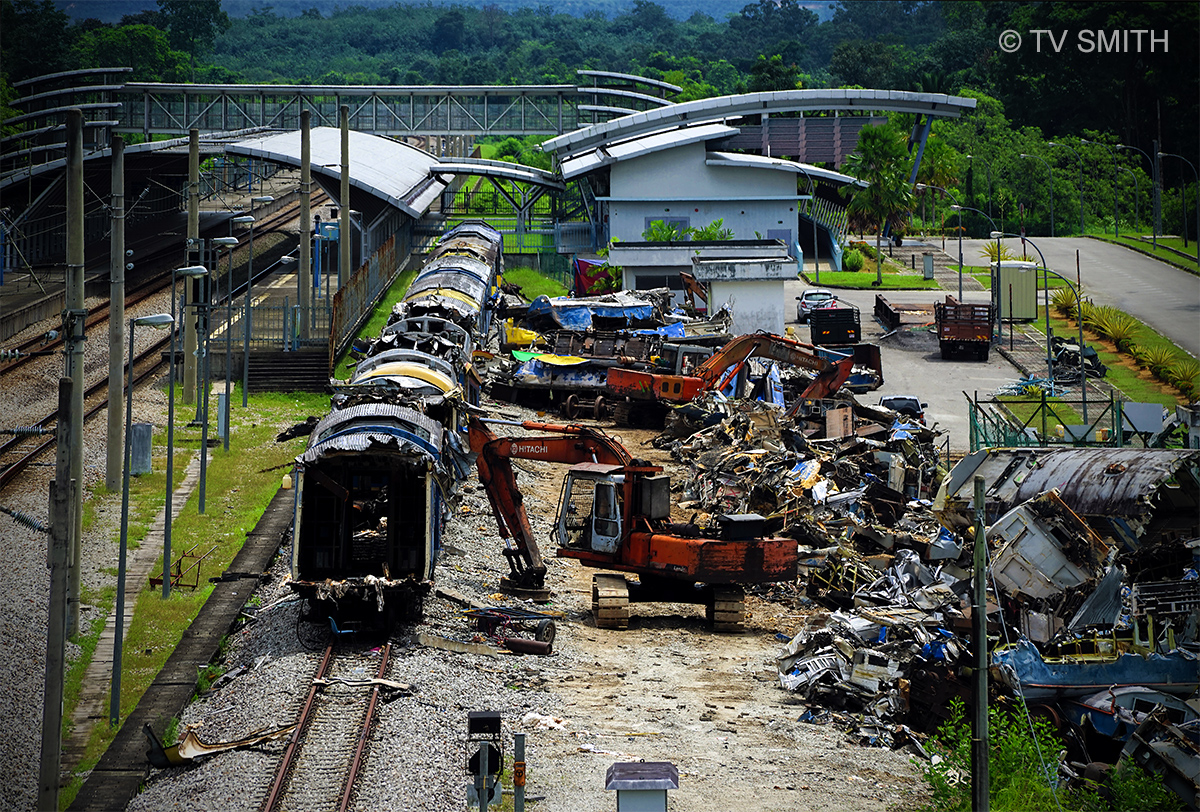
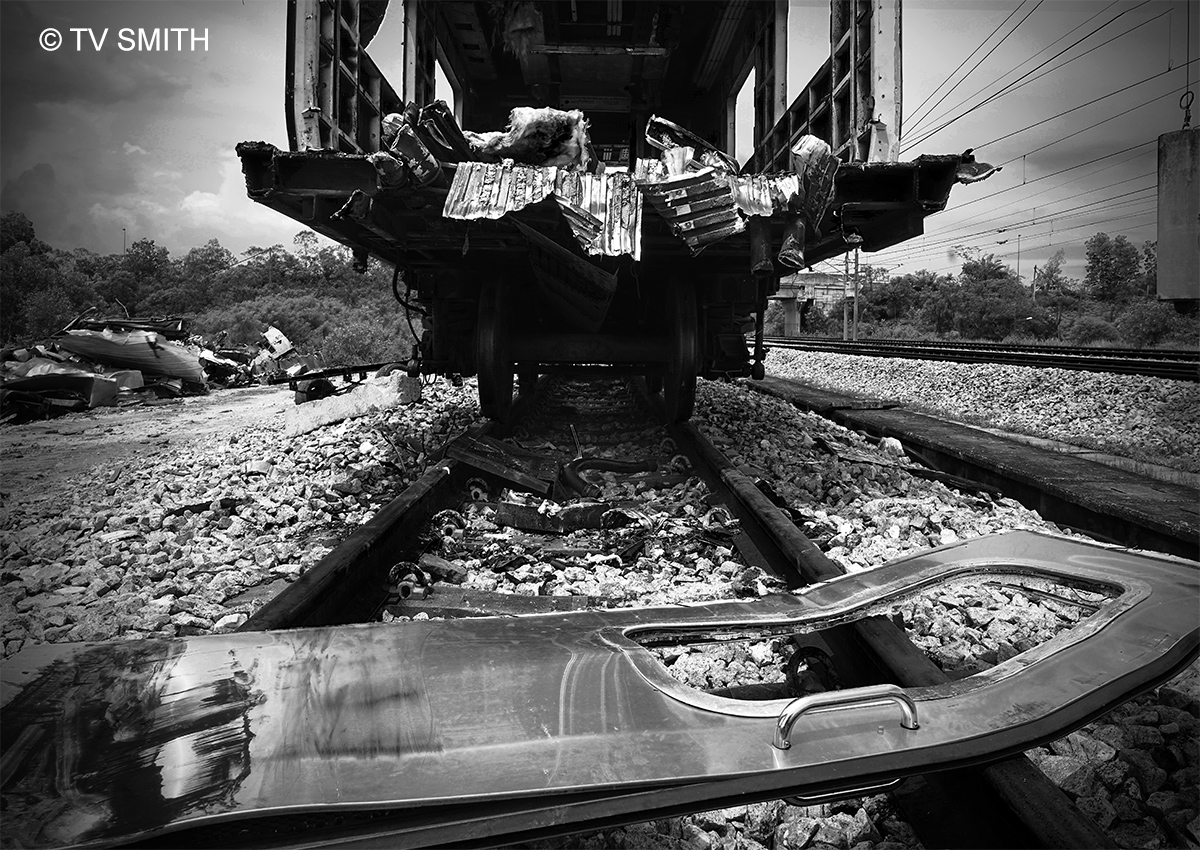
Maybe this is the reason it was chosen as the location to scrap the phased-out trains. No one comes here. I am glad I did.

Sony Alpha a7R, ISO 400, f13, 1/60 sec.

Behrang Stesen

The names Behrang Stesen and Behrang (town) are used interchangeably. The little town was the railway station and vice-versa. Things changed after electrification and double tracking of the lines.

Like the towns of Rasa and Tanjung Malim I visited earlier, the realignment of roads and construction of flyovers changed the face and structure of the affected towns forever.

But how did this historical station end up as a train’s abattoir? The clue lies in the station itself. We’ll look at this in the next post.

Photography Notes: There is a 6-foot high barrier at every railway track flyover, bridge or crossing to prevent people peeing onto the high voltage cables below.

I remember reading about its implementation after some foolhardy people peed onto the electric cables from above.

It was during the early days of electric trains. I think they wanted to test the electrical conductivity of urine.

Unfortunately. the barrier also makes photography difficult. I held the camera with up-stretched arms but couldn’t see the exposure info nor frame properly with the flipped-down LCD due to midday glare.

No problem. Activated Sony’s Wireless Live View and Smart Remote Control app on my Samsung Galaxy Phone via one-touch NFC.

The Sony PlayMemories Camera App allowed me to monitor, frame and touch-focus via the phone’s LCD screen. The setup is like a wireless or electronic periscope.

Sony Alpha a7R, ISO 100, f8, 1/500 sec.