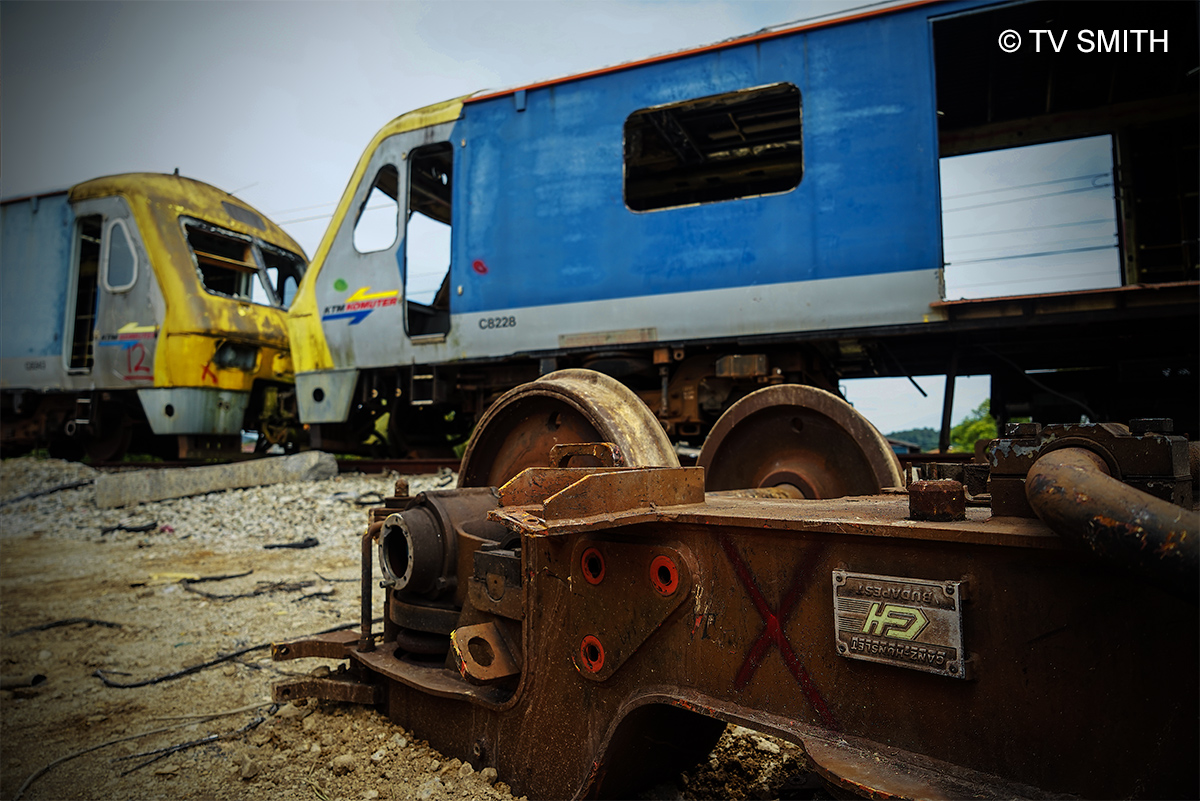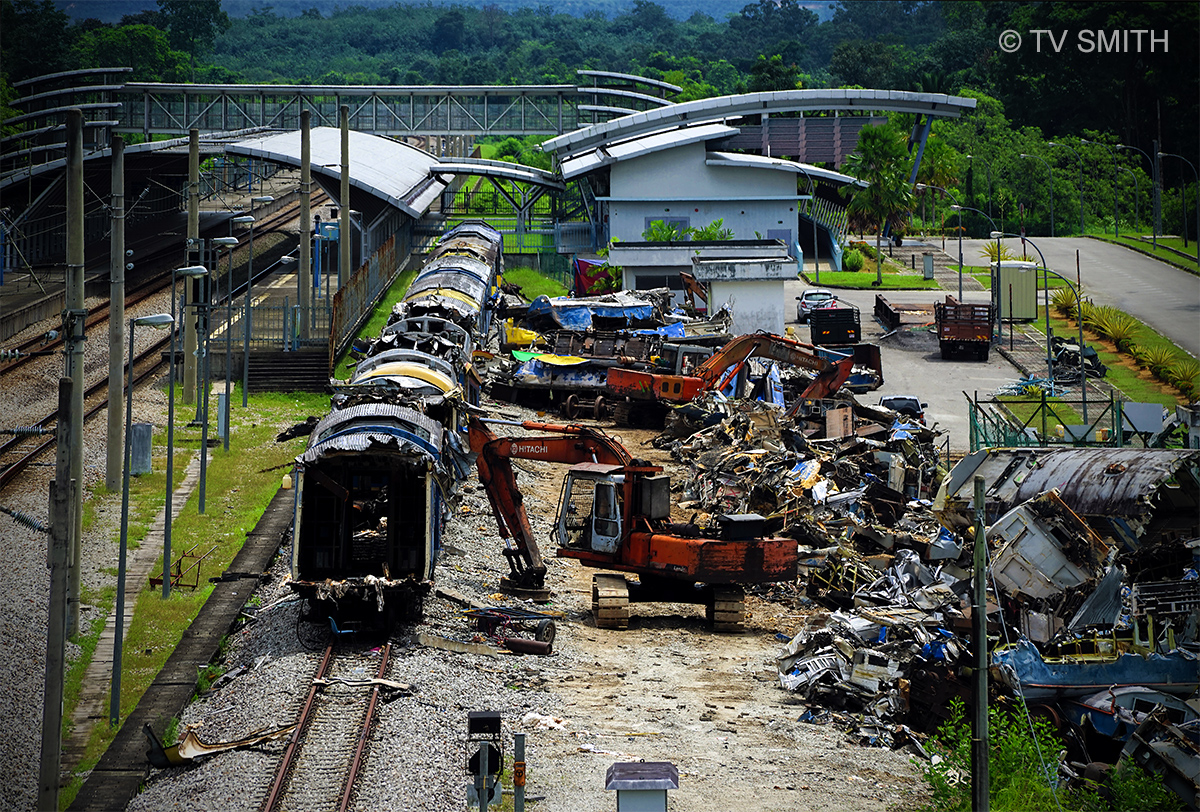
Behrang Stesen

The names Behrang Stesen and Behrang (town) are used interchangeably. The little town was the railway station and vice-versa. Things changed after electrification and double tracking of the lines.

Like the towns of Rasa and Tanjung Malim I visited earlier, the realignment of roads and construction of flyovers changed the face and structure of the affected towns forever.

But how did this historical station end up as a train’s abattoir? The clue lies in the station itself. We’ll look at this in the next post.

Photography Notes: There is a 6-foot high barrier at every railway track flyover, bridge or crossing to prevent people peeing onto the high voltage cables below.

I remember reading about its implementation after some foolhardy people peed onto the electric cables from above.

It was during the early days of electric trains. I think they wanted to test the electrical conductivity of urine.

Unfortunately. the barrier also makes photography difficult. I held the camera with up-stretched arms but couldn’t see the exposure info nor frame properly with the flipped-down LCD due to midday glare.

No problem. Activated Sony’s Wireless Live View and Smart Remote Control app on my Samsung Galaxy Phone via one-touch NFC.

The Sony PlayMemories Camera App allowed me to monitor, frame and touch-focus via the phone’s LCD screen. The setup is like a wireless or electronic periscope.

Sony Alpha a7R, ISO 100, f8, 1/500 sec.
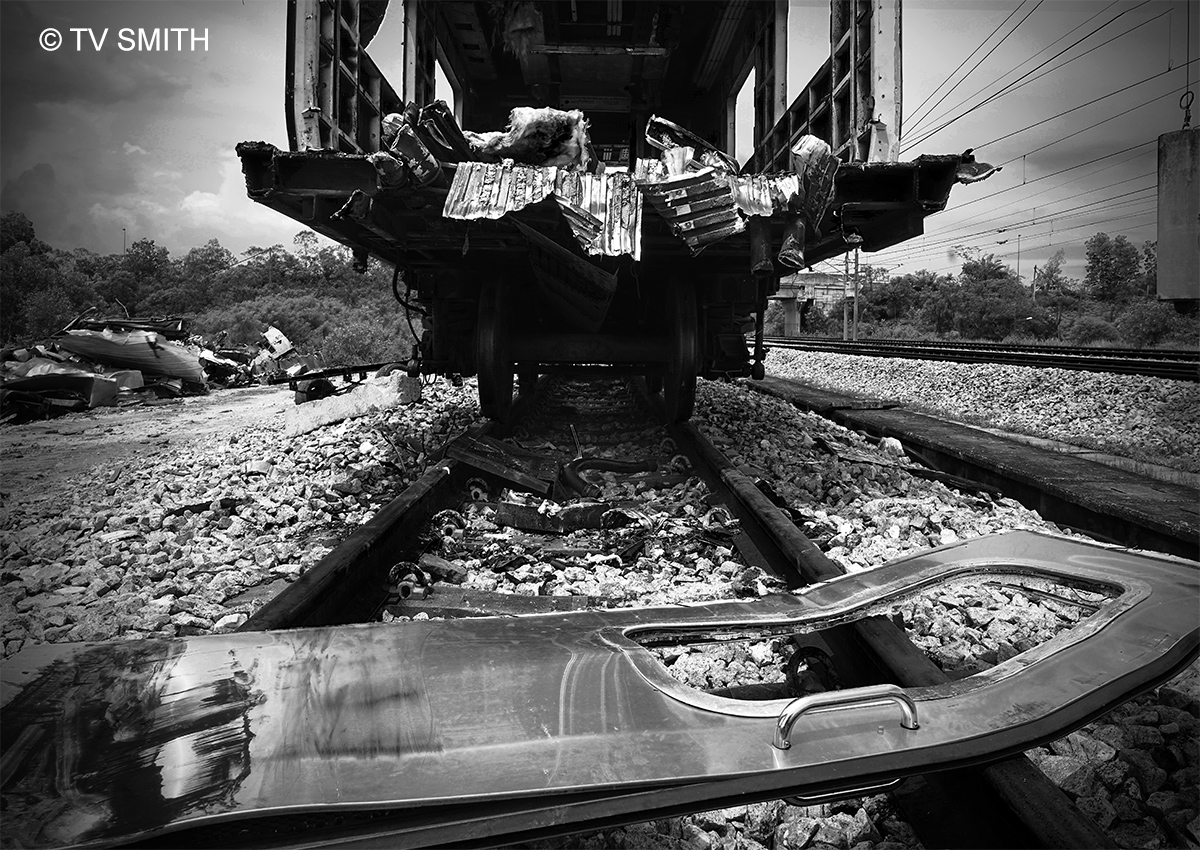
The Long Kiss Goodnight

For train buffs and railway enthusiasts, it is heartbreaking to see fairly new trains ripped apart by excavators and backhoes.

With a dismembered body part lying nearby, two dying trains kiss for the last time.

See my recent post “The Ghost Train” for some insights into the phasing out and demolition of this series of Komuter trains.

Sony Alpha a7R, ISO 100, f4.5, 1/500 sec.

A Moment of Contemplation

Still in Behrang, I walked into a vintage Indian grocery shop to get a soda. Met a friendly and sweet old lady there. She’s the proprietor, is in her seventies and operates the shop by herself.

The surroundings seemed deserted and she appeared delighted to see a new customer. Delighted not so much for the sale but for a chance to talk, I guess.

After the initial chat, I asked if I can photograph her as we speak and she agreed. Glad I asked because she was very natural in front of the camera. Depending on the subject we broached on, her facial expressions changed quickly from that of amusement, fear, excitement to sadness.

We spoke about the decline of Behrang town, the floods that hit her shop and life in a small town. I asked about her children. She turned her eyes away and paused for a little contemplation.

With a heavy sigh, she explained they left for the city a long time ago and no longer stay in touch.

Sony Alpha a7R, ISO 1600, f4, 1/250 sec.

Mee Hoon Kueh

Behrang is essentially a Hokkien town. Where Hokkiens ( 福建话 – Fujian people) live, you will find authentic Mee Hoon Kueh in eating places. By chance, I discovered one of the best here. Mee Hoon Kueh is similar to the Hakka hand-pulled “pan mee” or flat flour noodles.

Instead of noodle strips, the flour dough is delicately hand-kneaded with egg and oil into bite-size pieces. It is then brought to a simmer in a broth of ikan bilis (anchovies), pork balls, pork belly slices and sawi (mustard greens). It takes time to cook the dish as you can’t hurry love.

Good thing the boss of Vivian, the Indonesian cook, is always busy with mahjong. She learned the craft, refined it and now makes one of the most awesome mee hoon kueh I ever tasted. She said she might set up a stall back in Surabaya when she retires.

‘Mee Hoon Kueh’ is usually pronounced as ‘Mee Hoon Ker’ outside Penang and the north.

Sony Alpha a7R, ISO 500, f4, 1/80 sec.