Chunky telur dadar (fluffy beaten omelette) and shrimps. It is extra tasty when the rice is soaked in curry while in transit. RM 5.50.
Panasonic Lumix GM-1, ISO 200, f5.6, 1/50 sec.
#lunch #rice #curry #nasicampur #prawn #omelette #tapau
Chunky telur dadar (fluffy beaten omelette) and shrimps. It is extra tasty when the rice is soaked in curry while in transit. RM 5.50.
Panasonic Lumix GM-1, ISO 200, f5.6, 1/50 sec.
#lunch #rice #curry #nasicampur #prawn #omelette #tapau
Still can’t forget eating nervously with then PM Dr M (1981 to 2003) watching over us. He was a regular there and his picture was hanging on the wall as an endorsement or reminder of sorts. Such vivid memories a benevolent dictator evokes.
One of the signature dishes there that captivated me then was Ju Hu Char. Pronounced Jew Hoo Char.
Happy to see Little Penang Kafe at IOI City Mall and am glad they retained the menu offerings even though they have now grown into a giant chain. This dish is like a misnomer as Ju Hu Char means stir fried cuttlefish in Hokkien. There was more stir fried turnip or pang kuan (jicama to hipsters) but it was still tasty. Imagine eating popiah fillings without the skin. The shredded dish is a side order at Little Penang restaurant. It is not a Penang dish you can find easily at hawkers. It is more a home cooked festive dish in Nyonya or Peranakan homes.
Little Penang is good in that it allows the Malays to try normally non halal Penang dishes such as Char Kuey Teow, Lor Bak and Curry Laksa. The halal versions still taste authentic. Kudos to them.
Panasonic Lumix GM-1, ISO 800, f3.5, 1/60 sec.
Where is IOI City Mall? See MyCen Maps http://www.mycen.my/ioi-city-mall/
#ioicitymall #mall #littlepenang #penangfood #juhuchar #jicama
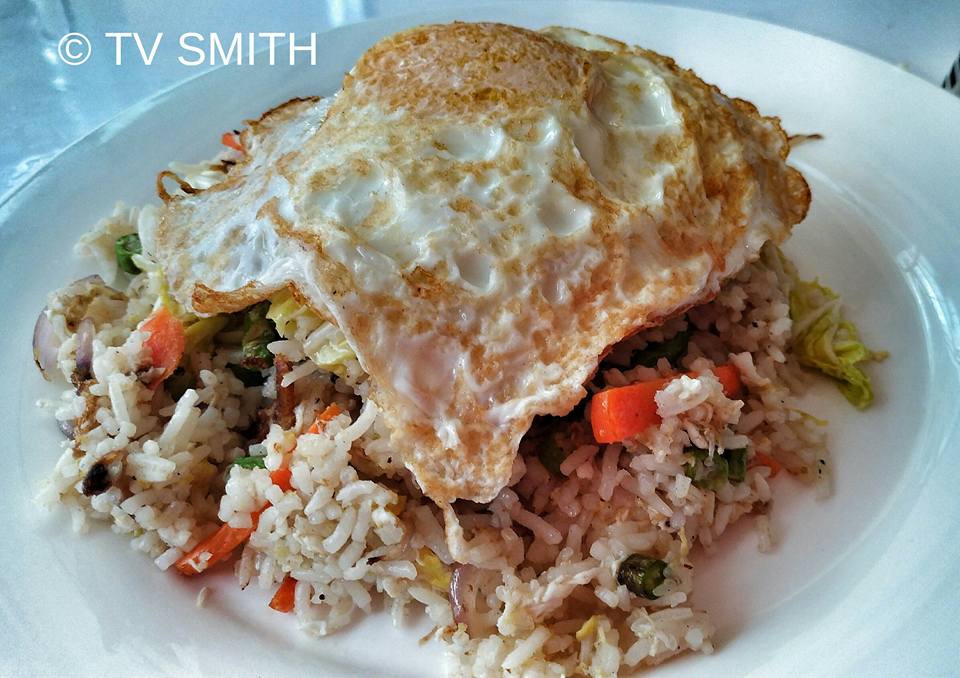
I decided to eat at the garden terrace lounge of the club. Nasi Goreng Kampung (traditional fried rice with anchovies) was uninspiring but reasonably priced for a private club.
I always thought the fried rice has some kind of American influence. Indeed it has a fascinating history and is crossover food.
The common explanation and assumption is that the U.S.A. abbreviation stands for Udang (Shrimps), Sotong (Squid) and Ayam (Chicken). There’s also an omelette on top or wrapped around the fried rice.
Its real origin or influence ought to be the American Fried Rice (ข้าวผัดอเมริกัน) dish, invented by the Thais during the Vietnam War.
It has American side ingredients like fried chicken, omelette, hot dogs and ketchup. The Americanization of the spicy Thai fried rice was to cater to American soldiers stationed in Thailand during the war.
Today, it can be found in the menu of Thai restaurants in the States and is listed as “Khao Pad American”.
Not surprisingly, many Tom Yam and Nasi Pattaya stalls serve this dish here. Locally, this is a dish where no two restaurants serve it the same way.
This one is from Restoran Studio 5 in Ampang Jaya. Even the 3 chefs in the 3 shifts here, cook it differently. Show this pic if you want the same version.
Sony Alpha a7R, ISO 1600, f13, 1/80 sec.
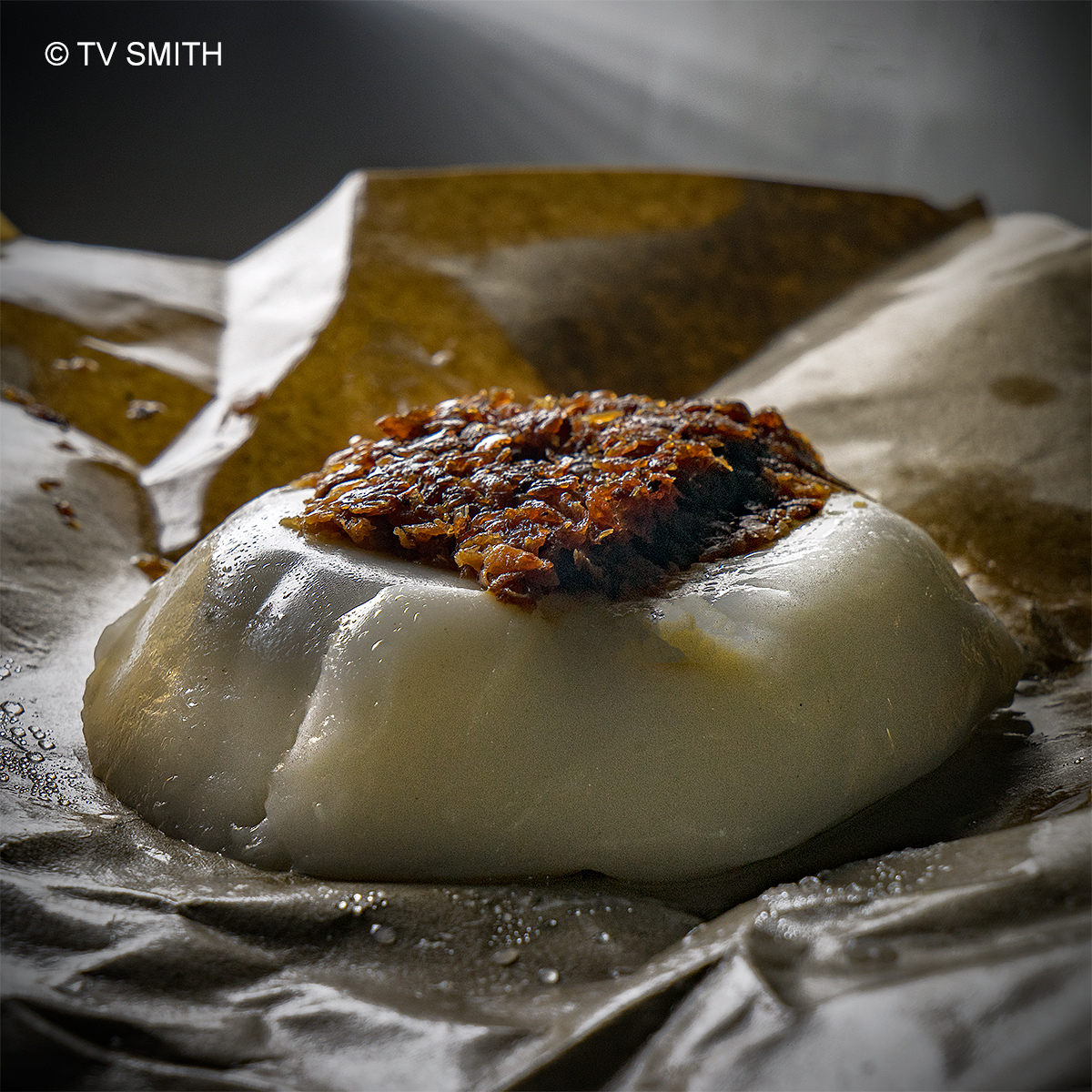
Chui Ker (Hokkien) or Woon Chai Koh (in Cantonese) is rice flour cake steamed in metal cups or bowls. The rice pudding is then topped up with ‘Chai Por’.
The toppings of Chai Por is preserved and fried radish (lobak) chopped into bits with sesame oil and soy sauce added. Chili sauce is optional.
It is takeaway or street food that should be eaten on the wax paper it comes wrapped in.
The exact recipe varies. Some use shallots or turnip, some add dried shrimps (heh bi) while others soak the toppings in a special oil concoction.
For the rice flour, some mix it with potato flour to enhance the texture and smoothness.
As such, chui kueh from different stalls never taste the same and the satisfaction varies greatly. If you find a good hawker selling it, pray it stays.
It is a dying traditional Chinese breakfast snack and is not as easy to find these days. Chui Ker is more popular in neighbouring Singapore where it is spelled and pronounced as chwee kueh.
Sony Alpha a7R, ISO 800, f14, 1/80 sec.