Kampung Hakka Mantin – Part 4

The Hakkas are a dialect of people from South China. Many migrants work at the tin mines in the area. It is alleged that the British colonialists called the town “Mine Tin”. Locals soon corrupt the name into Mantin, as it is known today.

The village under siege is well covered by my long time friend, the artist and activist Victor Chin. A Hakka himself, Victor has covered much ground in bringing awareness to the plight of the 120 year old village in his campaigns.

It is a story of a village caught by development and greedy, grasping developers. Underneath, is a forgotten story about history, heritage and court battles to stop bulldozers. Since Victor has covered much ground, I will not repeat his good work. Do a search and the stories are on the web.

I am attracted to the urbex and derelict aspect from a photography viewpoint. Many of the residents in houses already sold or surrendered, have moved out and the wooden properties are left in ruins pending final demolition. It was almost surreal and heartbreaking to see skeletal remains of houses seemingly abandoned in a hurry. Yet one can sense that some clinging humans still lurk inside. Tragic but glad I stumbled upon it before all is lost.

Asus Zenfone 3, ISO 50, f2 , 1/500 sec.

Where is Kampung Hakka Mantin? Map and directions at MyCen Maps: http://www.mycen.my/kampung-hakka-mantin/

#streetphototography #mantin #village #hakka #urbex #abandoned #dilapidated #documentary #kampunghakka #history #asus
A Ghost Station For A Ghost Train?

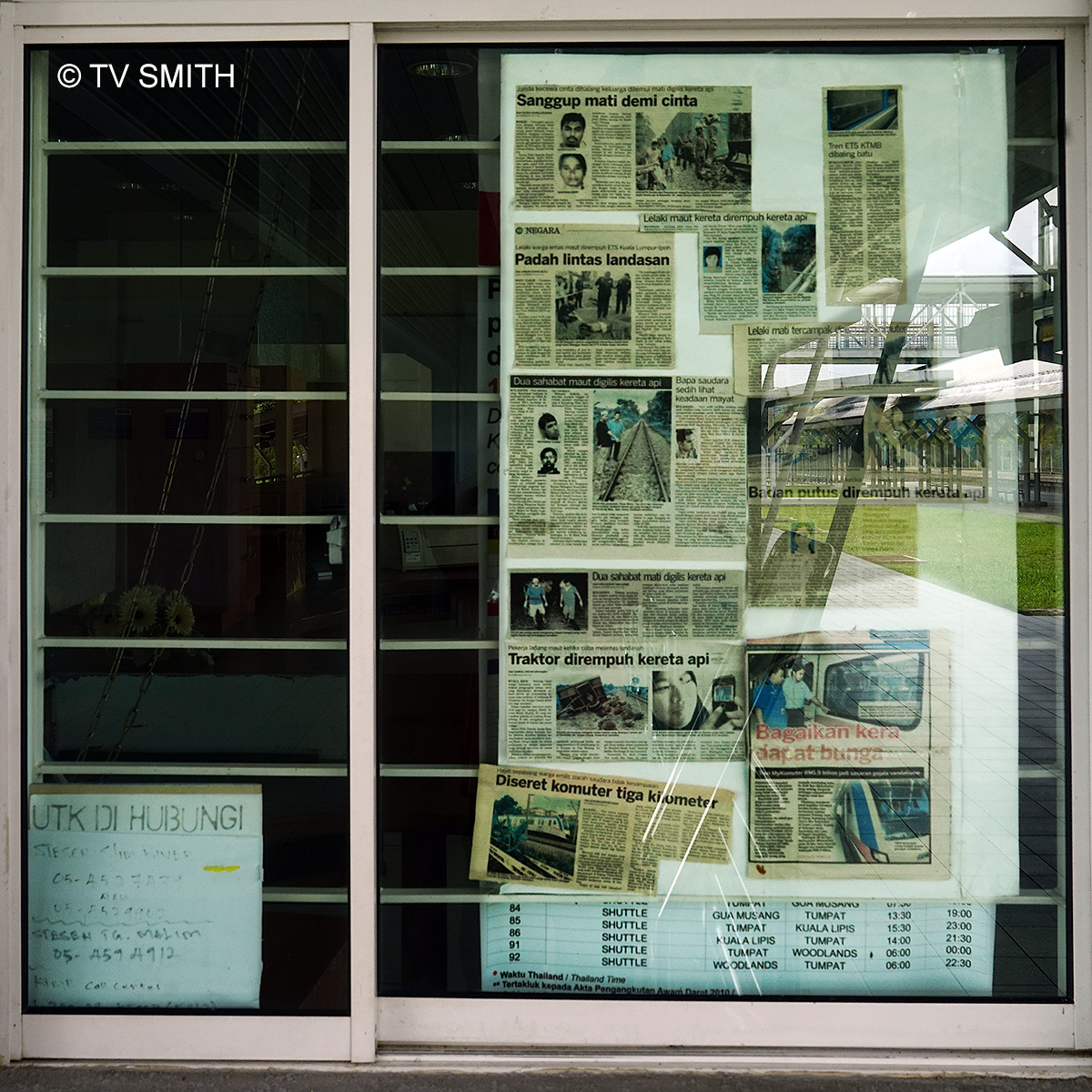
The permanently-closed ticketing counter at the Behrang Train Station is plastered with newspaper cuttings. A collection of morbid news on fatal accidents and suicides involving people on the railway track. It is to serve as a warning, perhaps. For there is open access to the platform and track.

The silence and emptiness is strangely attractive. It was as though me and my new friend, the invigorated cat, own the station. We wandered on the platform, looked at the tracks up-close, sat on a steel bench and waited for the train that never came.

I found out later from local residents that in spite the solitude, the station is functioning. One can still hop on a train from here, I was told. Provided someone on board is getting down, the train will stop.

The info left me with more questions. How does one disembark at the destination when boarding without a ticket? How would they know which station you board from?

How does a passenger from inside stop the speeding train in order to get down. Is there a bell button to push like buses of old days? From the platform, can I flag it to stop?

This is a nice and well-equipped modern train station, mind you. It is sad and surprising to see it so under-utilised. To the town’s credit, it isn’t vandalised at all. It also makes sense to not waste money on staff when there are hardly any passenger.

I don’t know. When it comes to train stations in small towns, the old adage of “if it ain’t broke, don’t fix it or re-locate it” applies, sometimes.

Maybe this is the reason it was chosen as the location to scrap the phased-out trains. No one comes here. I am glad I did.

Sony Alpha a7R, ISO 400, f13, 1/60 sec.

Sun Setting On A Rest House

The Tanjung Malim Rest House stands like a crumbling monument to an era long gone. There used to be a rest house in every town but only a few have survived or are still operating. Government rest houses are now mostly a British colonial day relic left abandoned and to fade away silently.

This one is unique as it is one of few with the original design from more than a 100 years ago. One of the last caretakers was a Hainanese. Not surprisingly, the rest house was well-known for the food he served.

During its glory days, this rest house not only served as a hotel (or motel) but also as a popular dining venue for royalty, other VIPs and room guests.

Now, the wooden structure is rotting away, the fittings stripped bare and creepers are encircling it in a slow strangle of death. Only thing that will probably remain is the eponymous Rest House Road it stands on.

Sony Alpha a7R, ISO 100, f11, 1/320 sec.

Rain Or Shine, The Show Must Go On

One of the things I decided from the get-go was to proceed come rain or shine. It would be impossible to find a continuous stretch of sunny days with the vagaries of our weather.

If it shines, the camera will absorb the colours. If it rains, I get to capture the wet landscape and activities. After all, this is documentary photography and I will go with the flow.

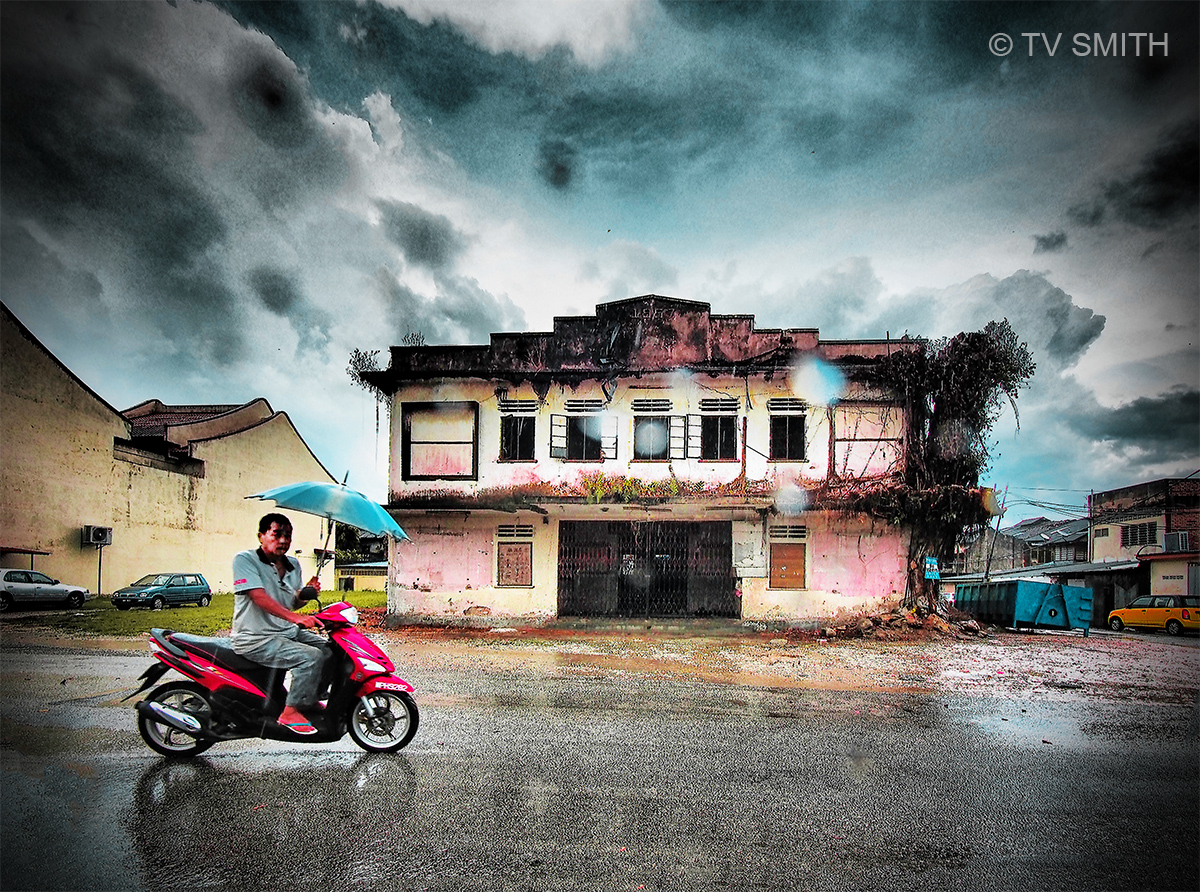
For this cinema in Rasa town, the show didn’t go on. Sad to see a building from 1957 left dilapidated and forsaken. Even sadder to see what looks like an equally old tree by its side; beheaded.

Rasa is the first town on the route that hit me as a dying town. Many of the buildings there are from 80 to 100 years ago but are are left abandoned. I have to find out why.

Olympus OM-D, ISO 200, f7.1, 1/200 sec.