Only Chinese In Kampung Bota Singh

Saw a signboard that says Kampung Bota Singh in the Hulu Bernam area and decided to drive in. Heh. Didn’t I meet the only Singh in a Chinese village a few days ago? This time at a village named after a Singh, I met a lone Chinese guy holding a pair of garden shears.

Mr Ng who is 69-years-old and a Hakka, held on to the shears menacingly as I introduced myself. He soon let his guard and the shears down and started telling me the history of the village.

The former rubber plantation land was owned by a wealthy Sikh named Bota Singh. In fact, many of the land around here are owned by Sikhs, according to Mr Ng. He and his family bought the land from the now deceased Bota Singh.

I noticed an old-fashioned kitchen cupboard in a messy garage (behind him). You know the type grandma used with four water bowls on its legs to prevent ants from crawling to the cooked food stored inside?

Told him to hang on to it as someday a stranger will come and offer him at least RM 100 for it. The collector will take it back, restore it and some hipsters will gladly pay a thousand ringgit to own one.

He was bemused and flabbergasted. I didn’t know how to explain ‘hipster’ in Hakka or Cantonese. Unadulterated Hakka dialect is quite funny with the standard expletives thrown in. Is quite hard translating it to clean English. Nevertheless, I will try:

Me: Is true, some city people will pay a thousand bucks for it.

Mr Ng: Smelly worn-out birth canal opening, are there really such fools in the city?

Me: There are. We call them “hipsters” in English.

Mr Ng: Hip makai male reproductive organ people! Copulate! Ptui!

Me: Hahaha. You are a jolly man, sir.

Sony Alpha a7R, ISO 250, f4, 1/60 sec.
Happy People Of Kampung Bilal

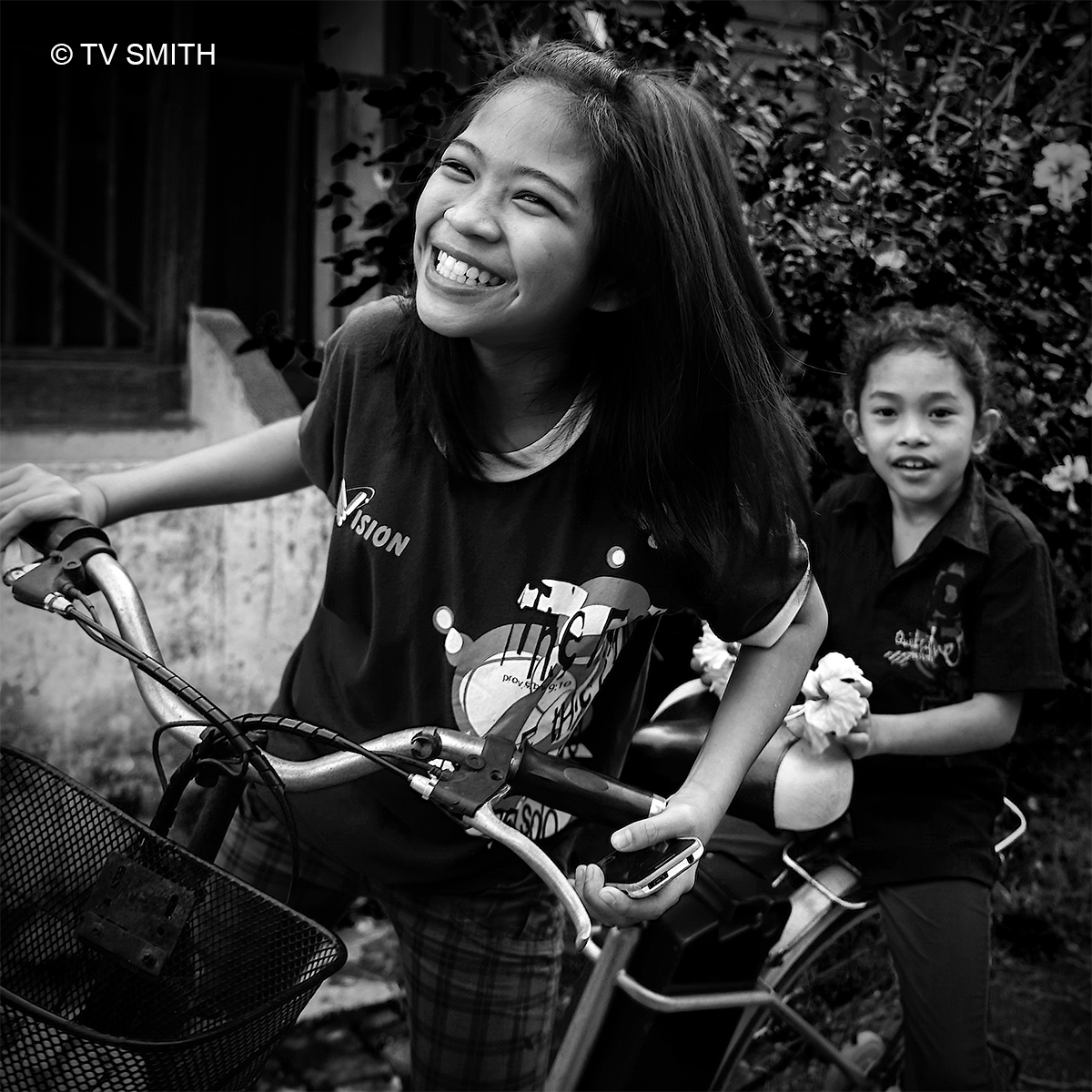
Wawa,11, and her friend Mia, 10, riding alongside my car. Love her very contagious smile. Kampung Bilal is a tiny village off Federal Route 1 in Hulu Bernam.

Sony Alpha a7R, ISO 100, f4, 1/60 sec.

Standing On Two States

A slim river, named the Bernam River, formed a natural border that separates the states of Selangor and Perak. In the 1700s, a Bugis settlement was established on the riverbank of Sungai Bernam.

Facing the river for this photograph, my left leg was on Tanjung Malim (Perak side) and my right leg on Ulu Bernam (Selangor side).

Sony Alpha a7R, ISO 100, f11, 1/800 sec.

There’s A Lesson In Here Somewhere

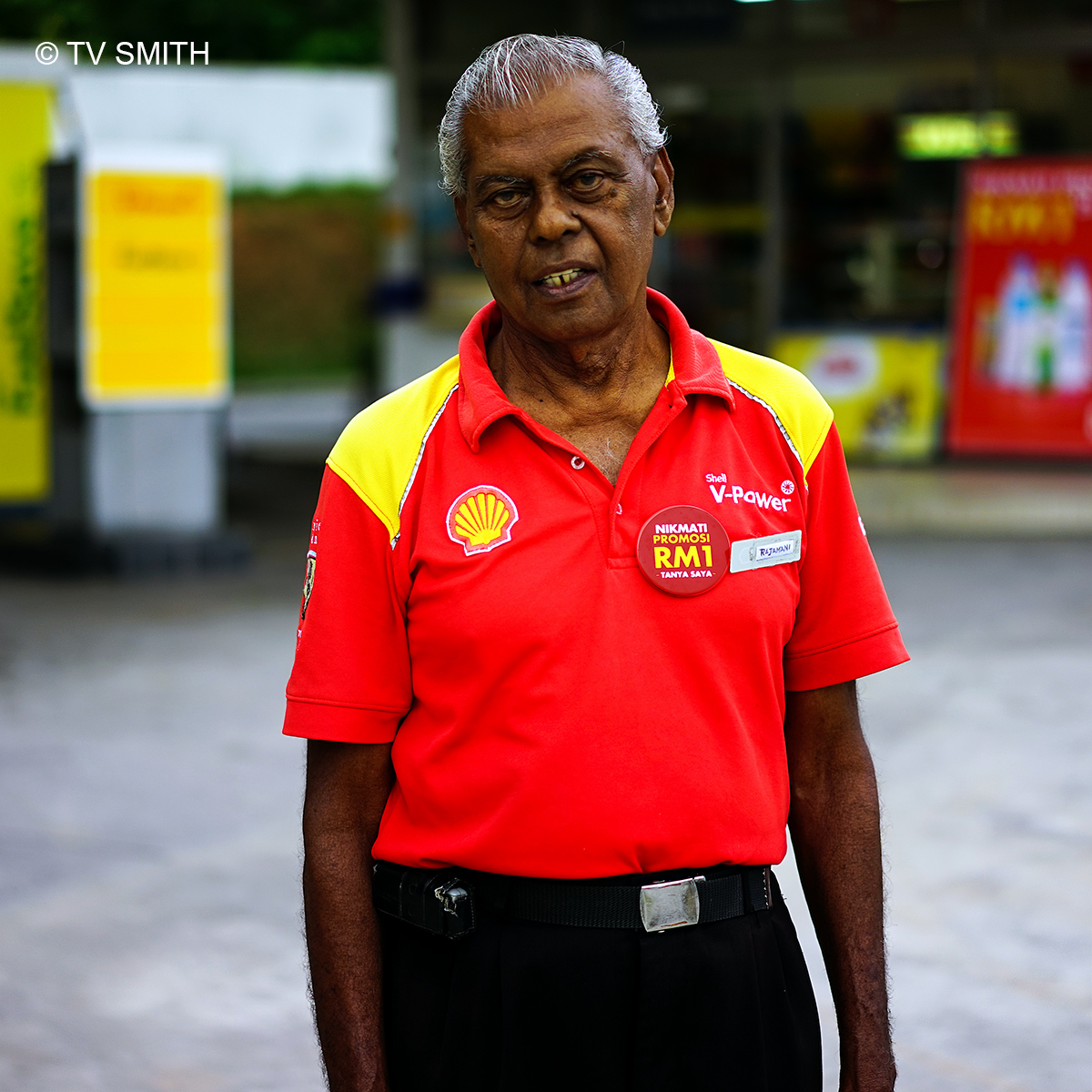
At the turning into Kuala Kubu Bharu town, I stopped to fill up and friendly pump attendant, Mr Rajamani, assisted me. Since he is KKB born and bred, I asked him if that’s anything interesting to see inside. He thought about it for a few seconds and said: “Not, really. Mostly government offices”.

Familiarity breeds indifference or nonchalance, I guess. It turned out to be the town with the most things to see, so far. Glad I went ahead and explored it, running into so many interesting people and places.

A former government servant, Rajamani has worked at this Shell station for the past 20 years after retiring from civil service. He is now 78, fit and sharp.

I am here again to refill before continuing north on Federal Route 1. Jaded as he was, his face light up when I showed him pics of some of the KKB residents I captured. He smiled broadly as he identified each by name.

Before I drove off, I asked him a question that was bugging me:

Me: “Were petrol stations, such as this one, affected when the highway opened up and transit traffic by-passed the small towns?”.

Rajamani: “Not, really”.

Me: “How is it?”.

Rajamani: “Locals have cars too lah”.

Photography Tip: On a road trip, pack along a small low-light lens but not for bokeh or stylo-mylo purposes. I put it to good use here where twilight was fast fading.

I normally click as I converse, composing with the rear LCD screen so that my face is visible to the subject. With the Sony Zeiss Sonnar T, I was able to dial a fast enough shutter speed to hand hold with one hand and also to freeze a very animated subject.

Goodbye KKB, thanks for the friendships and memories.

Sony Alpha a7R, ISO 100, f1.8, 1/250 sec.

Teng Wun

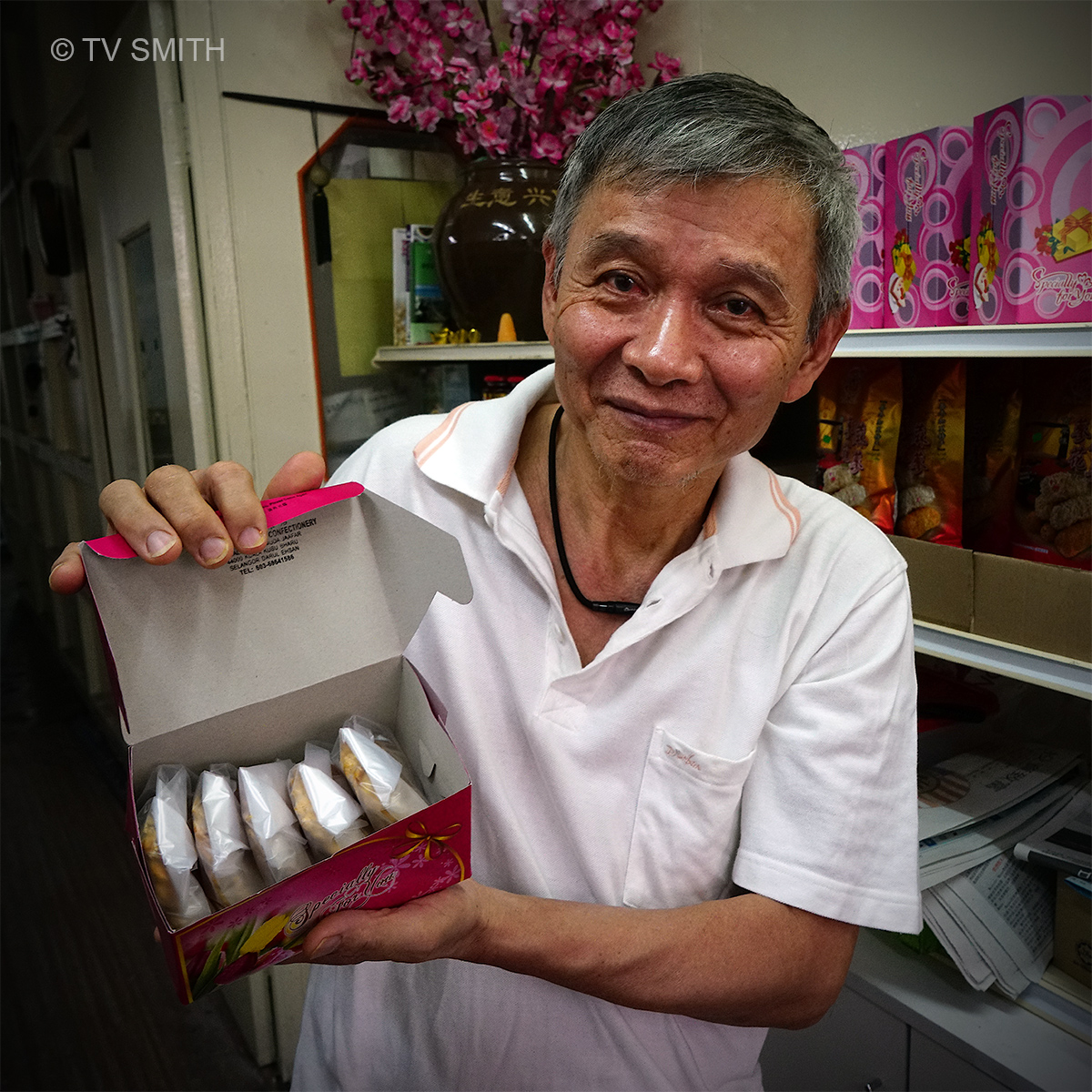
Mr Wun the baker and proprietor of Teng Wun Cake Shop, together with his wife, are making 400 to 500 pieces of kaya puffs a day, and were doing so for the last 30 years or so.

Quite an amazing number considering there are not that many residents, let alone tourists in KKB. Many of his customers are locals, including Indians, Malays and Orang Asli folks.

Kaya, also known as coconut custard is of Peranakan origin and not Hainanese, I believe.

Local Hainanese people (originally from the Island of Hainan in South China) are known for their culinary skills, especially fusion food of East and West.

Chicken chop and kaya-butter toasts are Malaysian-Hainanese inventions. Many also used to work on the trains’ (KTM) catering coach and operate kopitiam (coffee shops) around the country.

Another Hainanese in town proffered a theory as to why they are good cooks. They were latecomers to then Malaya. They came after the earlier wave of migration by the Hokkiens, Cantonese, Teochews and Hakkas. By the time they arrived, all viable business opportunities and job openings were controlled by powerful clans and triads.

Without a membership card, they ended up working for English expats (wealthy colonialists) as cooks and caretakers of mansions. Here at KKB, several Hainanese residents and their ancestors used to work at the colonial bungalows up on Fraser’s Hill.

It was from the British families that they were introduced to western food and they soon enhanced the recipes further by adding Chinese touches. It is also claimed that they modified a kebab leftover from a garden party one night and added peanut sauce.

The creators named it “Sar Tay” meaning ‘three pieces’ in Hainanese, and voilĂ !; satay was born. Most likely an urban legend but quite possible considering their inventive kitchen skills.

Back to Mr Woon. His shop also sells the famous kaya by itself in small jars. The spread used on bread is thinner than the kaya used for the puffs. Mr Woon says a thicker version is used in the puffs so that is easier to wrap the skin around.

The nice gentleman offered me some complimentary butter sponge cakes to try. I turned that down to leave tummy room for the puffs. Yes. They are the world’s most awesome kaya puffs.

Sony Alpha a7R, ISO 2000, f9, 1/60 sec.