Nine Emperor Gods Festival Procession In Jinjang – Part 4

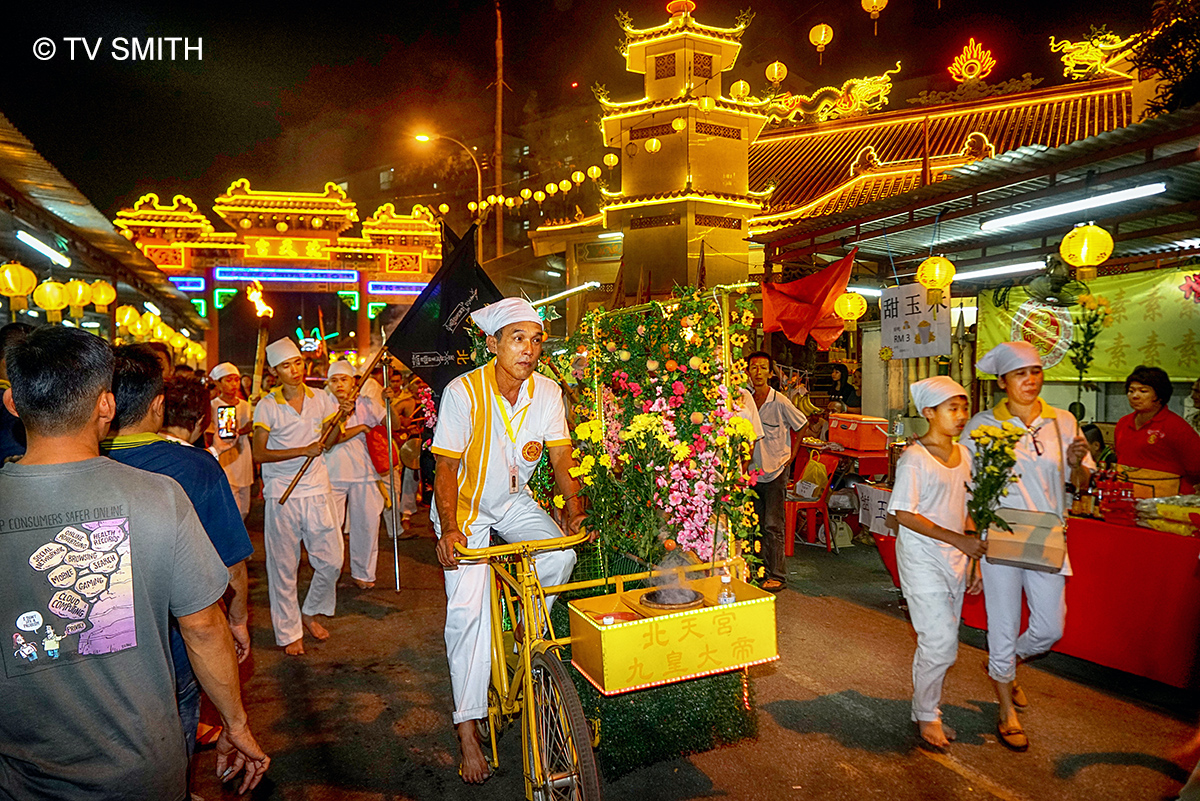
It is currently almost unknown and under-promoted. I asked the cycling man about the significance of pedaling the tricycle. He told me has no idea. Lol.

Besides talking to strangers, I spent most of my time adjusting the flash strength as the white attire worn by devotees can over-expose or burn out easily.

One thing I learned is that the standard zoom (24 to 70mm) lens and tiny HVL-F20M flash were sufficient for the parade. Felt like jettisoning the redundant heavy prime lenses and powerful HVL-F60M flash I brought along but my car was too far away.

Always travel light when you don’t know how far you will be walking.

Sony Alpha a7R, ISO 1250, f4, 1/80 sec.

Nine Emperor Gods Festival Procession In Jinjang – Part 1

The roads here are a maze so I had no idea of the route the parade will cover. Heck. I don’t even know where my car was parked but I did bread crumb my tracks with a pic on my phone camera at every junction or turn during the walk.

Jinjang was a Chinese village notorious for gangsterism and triads many years ago. At one time, no taxis will send passengers in for fear of ambush by the gangs.

The gangs are gone or are silver haired now. The Chinese community solved the gangsterism and associated social problems by sending their kids to college. This broke the vicious cycle but it is to have another impact on the festival which I shall discuss in the next post.

As a photographer, my attitude was to cross the bridge when I get there, prepared to face all eventualities since it is my first time at their parade. There’s smoke, there’s fire and the Pak Thian Kiong temple is beautifully lit tonight. Am loving it but wished they started during the magic hour.

Sony Alpha a7R, ISO 400, f4, 1/80 sec.

Going Home For Raya

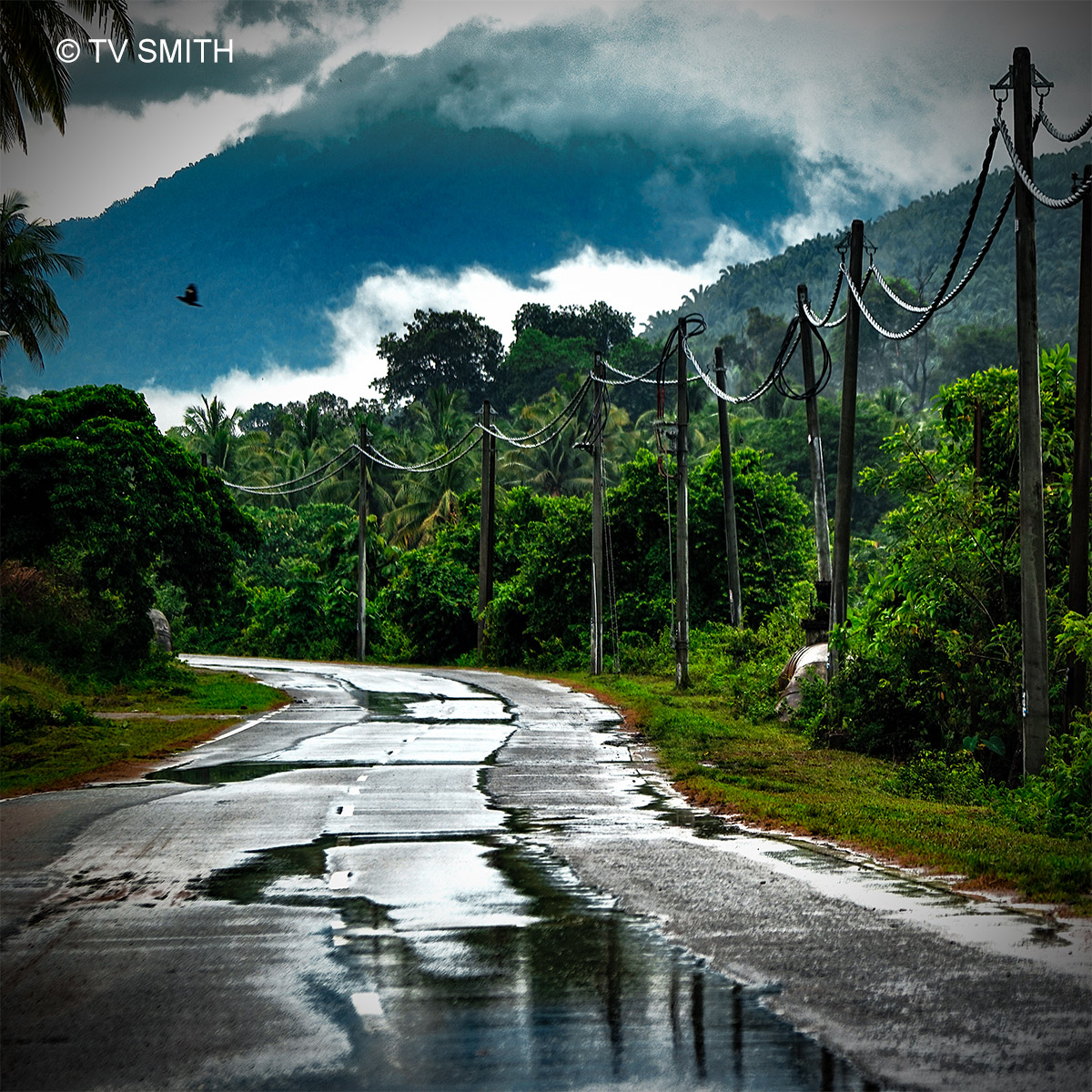
I started on this journey on Federal Route 1 on March 29. I have since covered Rawang, Serendah, Ulu Yam, Rasa, Kuala Kubu, Kerling, Kalumpang, Hulu Bernam, Tanjung Malim, Behrang, Slim River and many tiny places in between.

To tell the story, I visited quaint little towns, rustic villages and wandered through dusty roads and jungle trails. Camped in tents, stayed at dodgy ‘rumah tumpangan’ (lodging houses) but also at comfy hotels, chalets and motels. Met friendly and warm people from all walks of life.

In between, I have also traveled back to my home base in KL several times to replenish and to attend to paying work. Where possible, I try to continue again the next day. Quite tiring but it kept the sense of adventure and exploration fresh in my mind.

I’m going to take a short break to visit the Ramadan bazaars in KL that I love, break fast with friends and make way for the many cars in the upcoming exodus. Will continue with the road trip where I left off after the Hari Raya holidays.

Another reason I need the break is that I must make my new website catch up with the daily pics. Before I can finish adding some of the missing older ones, I ended up acquiring even more new pics and stories to manage.

Nevertheless, the website gives it the much needed interface of systematic sorting, categorization and tagging of subjects befitting an epic travelogue. And unlike Instagram, Twitter or Facebook, topics are easily searchable and there are related links in every article or post.

Look out for more unique images and stories of awesome people, nature, animals, food and places on the route after the break. We’ve only just begun.

Sony Alpha a7R, ISO 100, f4, 1/320 sec.
The Kopitiam Pasta

I think it was Alisan coffee shop in the Masjid India area that pioneered the food court within a kopitiam. That was in the early 1980s and the concept has since been adopted by many Chinese coffee shops. The big and popular ones may squeeze as many as two or three dozen food stalls into a single shop lot.

Currently, one of the less common types of food served at such places is pasta. With the new burden of GST and the Shringgit (a term attributed to my friend Sidek Kamiso), the poor man’s Italian dining should become more popular.

If you are not a snob, this Seafood Pasta is good value as the portion and ingredients are generous at RM 9 nett. Of course, it won’t taste as good as that from an Italian chef who hand craft his pasta and blend the sauce from some time-tested family recipe.

Nevertheless, I like that I can customise it in whatever way I want at the kopitiam. No snooty chef or maitre d’ protesting because it is heresy to even suggest.

The fat Chinese cook here nodded his head happily when I requested a tomato-based sauce even though it is served dry.

I also like that I can order a barley drink to go with it and have dessert of Nyonya Kuih Lapis bought from another stall outside.

The coffee shop is at one corner of Jalan SJ6, Selayang.

Sony Alpha a7R, ISO 320, f6.3, 1/250 sec.

Bak Chang

Today is Duanwu ( 端午节) or the Dragon Boat Festival or the Chang Festival for Chinese. It falls on the fifth day of the fifth month of the lunar calendar and as such is also known as the Fifth Month Festival in Malaysia, Singapore and Taiwan.

The festival commemorates the life and death of ancient Chinese scholar and poet Qu Yuan. He committed suicide by drowning to protest against the corrupt and dictatorial regime that ruled.

Legend has it that people threw rice into the river both as a food offering to Qu Yuan’s spirit and also to deter fish from eating his body.

Today, symbolic glutinous rice or sticky rice dumplings known as zongzi (粽子) are eaten to mark the occasion. It is a public holiday in China, Hong Kong, Macau and Taiwan. Locally, the bamboo leaf-wrapped dumplings are known as bak chang (Hokkien) or choong (Cantonese).

Interestingly; the Chinese in Indonesia refer to the festival as ‘Peh Cun’ and it is known as ‘Festividade do Barco-Dragão’ in the former Portuguese colony of Macau. The dumplings are known as ‘Machang’ among Chinese Filipinos.

I like this simple dumpling from a roadside seller in Kampung Cempaka. It has salted duck egg yolk, fatty meat, dried shrimps (heh bee), mushroom and importantly for me; no mung beans.

The humble kiosk provides a no-bean option. Freedom of choice: Something which Qu Yuan stood for.

Sony Alpha a7R, ISO 2500, f6.3, 1/250 sec.