War And Peace

The Larut War of the early tin mining years took place during the second half of the 19th century. Running battles between the Cantonese-dominated Ghee Hin clan and the Hakka-dominated Hai San clan continued until the Pangkor Treaty in 1874.

Near the end of the protracted war, some Hokkiens fled central Perak and settled in more peaceful Tanjung Malim. In the early 1900s, they built two rows of shop houses that formed what is the old town today. A few of these ancient buildings still stand.

Sony Alpha a7R, ISO 100, f6.3, 1/250 sec.

Time To Talk

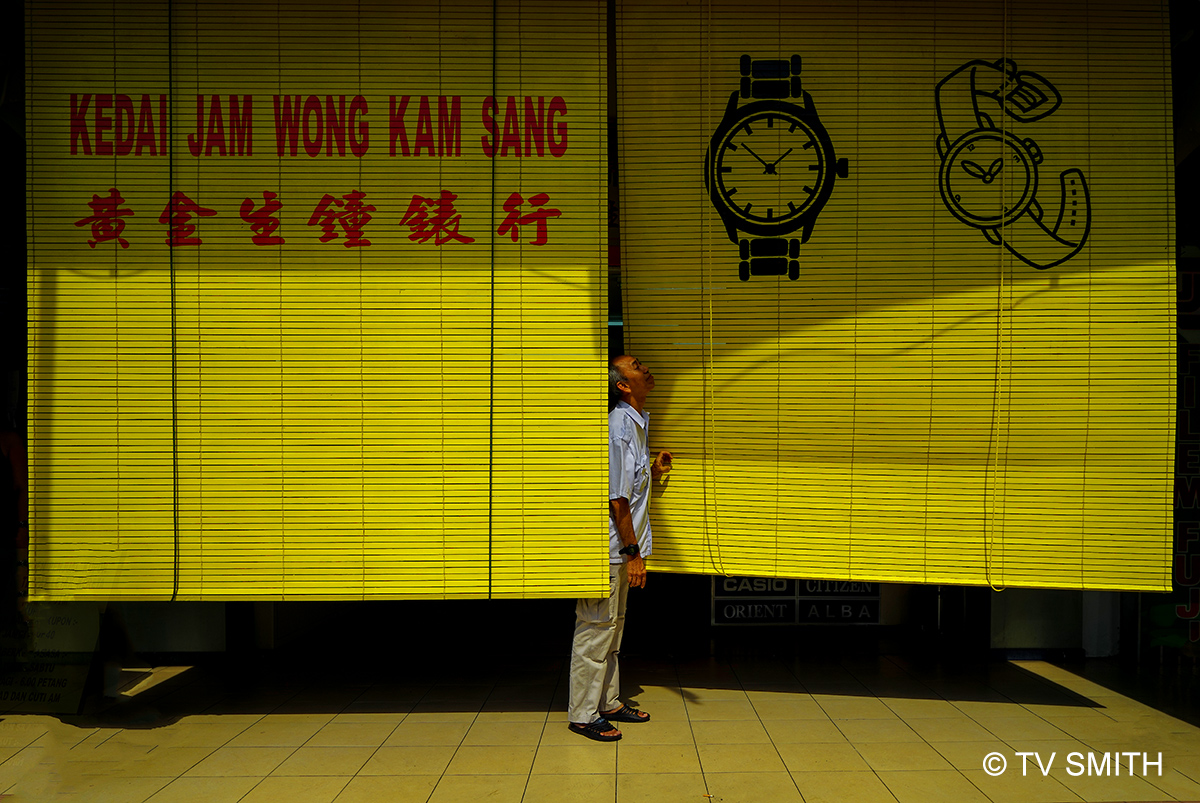
Mr Wong is the proprietor of a watch and clock shop in Tanjung Malim town. The family business is now more than 60 years old and I asked him about changing trends. They used to sell Rado, Omega, Timex and Tissot. The current top selling brand is Casio.

But a more important question: Why is the time displayed on a analog watch or clock at a shop always set to 10:10? The answer is simple.

At 10:10, the hands are in an optimum or ideal position where it doesn’t block the manufacturer’s logo (typically at 12 o’clock) and date window (typically at 3 o’clock).

Love the old-fashioned wooden strip blinds on the shopfront. This kind of sunshade, also known as bamboo chicks, are made and sold by another shop in Tanjung Malim town.

Sony Alpha a7R, ISO 100, f11, 1/320 sec.

The Way It Used To Be

Like a fading 3R print, this scene in Hulu Bernam is reminiscent of days gone by. Kampung houses on stilts and children kicking around outside.

While one can still find many such settings in rural areas, this one has an invisible modern element in the air. This village at the border of Perak is billed as a Kampung Tanpa Wayar (Wireless Village).

Photography Notes: Things to do when you are bored in a small town hotel and have a laptop with you. One of the most noticeable self-destructing effect of old colour prints is the magenta shift due to dye aging, light damage and latent chemical reaction.

To achieve the old picture look, I altered the magenta and green balance and added the finger print with Photoshop CC. Scratches, staining and dirt were added via Snapseed Desktop.

A subtle pixel shift in focus was also required as the modern-day a7R is very sharp. Looking at some of the prints from my Canon T90 film camera (dubbed The Tank by Japanese photojournalists), they appeared reasonably sharp too in spite of the subsequent colour fade.

Sony Alpha a7R, ISO 640, f4, 1/640 sec.

Kaya In History

During the few days I spent at Kuala Kubu Bharu, I asked the town folk as to which is the most famous institution. Famous, as in well-known to stopover visitors, tourists and outsiders.

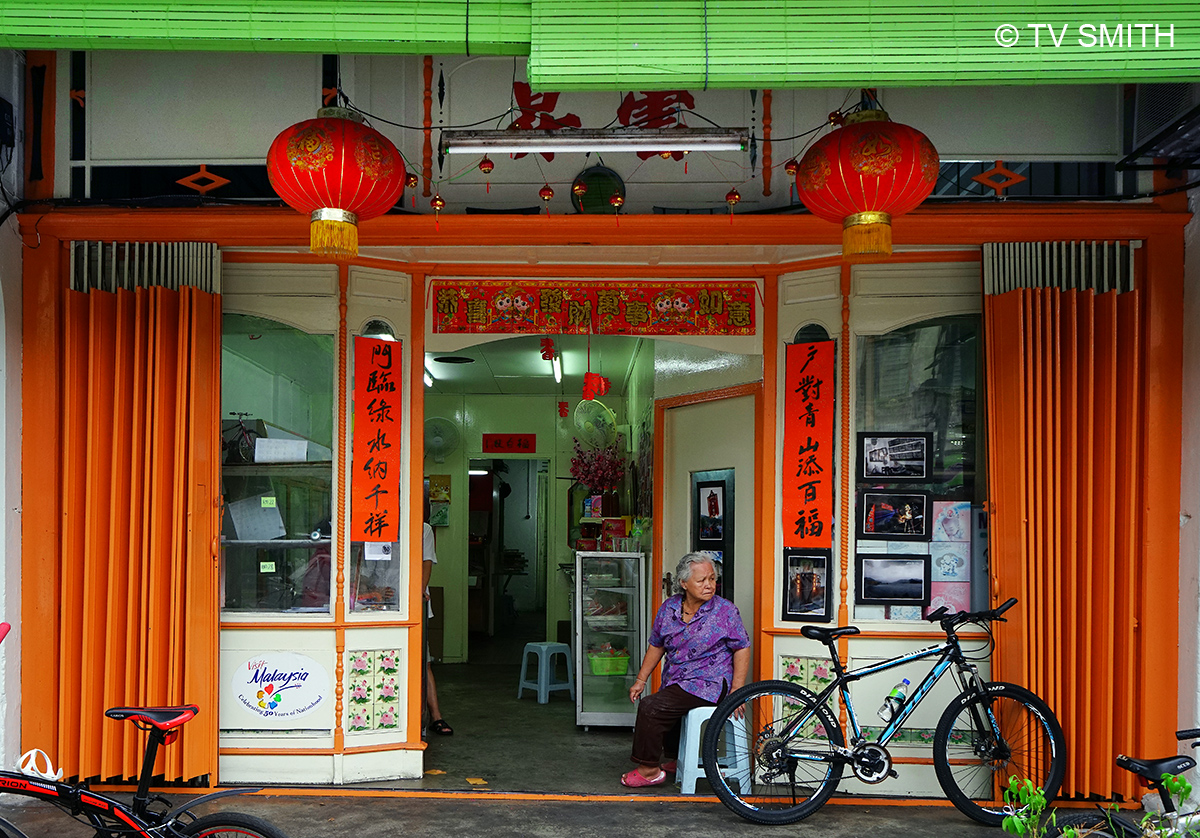
The answer, invariably, is always Teng Wun the Hainanese cake shop. Cakes are not the main magnet of the shop, though. It is their kaya (coconut egg jam) puffs; allegedly the world’s most awesome. The world here, means the handful of countries that sell this unique pastry.

Since I’m leaving town, I went there to buy some kaya puffs as edible souvenirs. Before stepping in, I was already enthralled by the facade. The shop front looks like the painted backdrop hanging on a Chinese opera stage. Except for that damn bicycle, of course.

The classic design is similar to that of many shops from days of old. Brutal but quick tooth-extraction shops, photo studios, gents tailors and traditional hemorrhoids (piles or buasir) busters; to name a few. I have seen the remains of similar shop-front designs at many other small towns.

Some were modernised beyond recognition while many others were left abandoned to become decaying relics from a bygone era. This one not only looks pristine but smells nice too.

Sony Alpha a7R, ISO 800, f9, 1/60 sec.

Rain Or Shine, The Show Must Go On

One of the things I decided from the get-go was to proceed come rain or shine. It would be impossible to find a continuous stretch of sunny days with the vagaries of our weather.

If it shines, the camera will absorb the colours. If it rains, I get to capture the wet landscape and activities. After all, this is documentary photography and I will go with the flow.

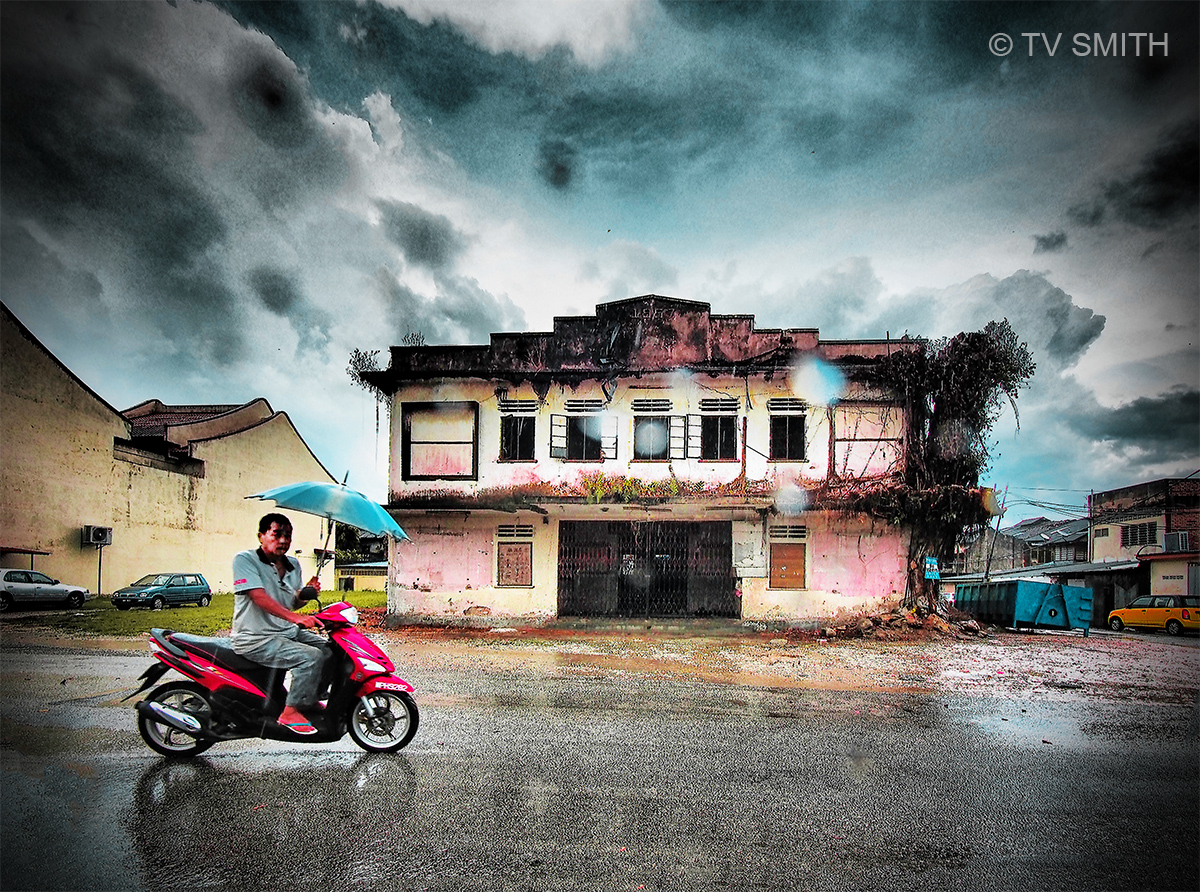
For this cinema in Rasa town, the show didn’t go on. Sad to see a building from 1957 left dilapidated and forsaken. Even sadder to see what looks like an equally old tree by its side; beheaded.

Rasa is the first town on the route that hit me as a dying town. Many of the buildings there are from 80 to 100 years ago but are are left abandoned. I have to find out why.

Olympus OM-D, ISO 200, f7.1, 1/200 sec.