Cantonese Fried Noodles

The ‘yin-yang’ version is made with fried ‘kueh teow’ (ricecake strips or Chinese fettuccine) and ‘bee hoon’ (rice vermicelli). A thick broth
cooked with corn starch, eggs, meat and vegetables is poured over the noodles.

I love my vermicelli crispy so I always request they not drown theingredients with too much gravy. At a roadside and village stall, it
is easy to do that. Just speak to the cook or chef directly when ordering.

Olympus OM-D, ISO 800, f4, 1/20 sec.

#foodphotography #noodles #chinesefood #cantonesefried #vermicelli #tbt

Dongzhi 2016

The soup or syrup turned cloudy when I stirred it. Greenish contamination from the natural pandan (screwpine) colouring, I wanted to add Ribena cordial to it. In the end, I went with my mom’s suggestion of adding Nescafe and evaporated milk.

Happy Winter Solstice 2016 today. Also known as the Dōngzhì Festival or Tang Chuek or Kor Tung in Chinese culture.

Panasonic Lumix GM-1, ISO 200, f6.3, 1/160 sec.

#foodphototography #dongzhi #tangyuan #chinesefestival #chineseculture #wintersolstice #lumix

Fish Cake From The Hokkien Mee Stall

The fish biscuit, as it is known in Chinese, is usually made from either the Spanish Mackerel (Ikan Tenggiri) or the Wolf Herring (Ikan Parang).

The latter is also known locally as Saitoh Fish (in Chinese) because of its machete (parang) shape.

Unlike English fish cakes made from cod and potato patty, the Asian fishcake is without batter and uses freshly minced fillet paste mixed with flour.

When well done, the fish cake should not be too oily and possess an aromatic flavour. Under the fried crispy skin is the soft but springy fillet that melts in your mouth.

This is one of the better ones from Restoran Xin Yuen Kee in Kuala Kubu Bahru, famous for its Lor Mee.

Sony Alpha a7R, ISO 1000, f9, 1/80 sec.

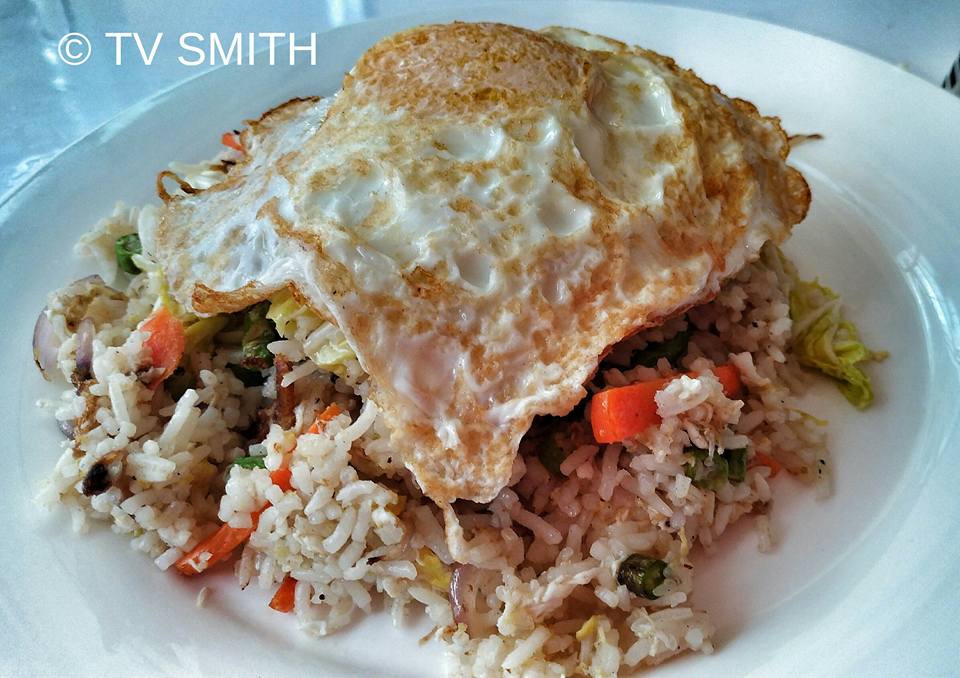
Nasi Goreng U.S.A.

I always thought the fried rice has some kind of American influence. Indeed it has a fascinating history and is crossover food.

The common explanation and assumption is that the U.S.A. abbreviation stands for Udang (Shrimps), Sotong (Squid) and Ayam (Chicken). There’s also an omelette on top or wrapped around the fried rice.

Its real origin or influence ought to be the American Fried Rice (ข้าวผัดอเมริกัน) dish, invented by the Thais during the Vietnam War.

It has American side ingredients like fried chicken, omelette, hot dogs and ketchup. The Americanization of the spicy Thai fried rice was to cater to American soldiers stationed in Thailand during the war.

Today, it can be found in the menu of Thai restaurants in the States and is listed as “Khao Pad American”.

Not surprisingly, many Tom Yam and Nasi Pattaya stalls serve this dish here. Locally, this is a dish where no two restaurants serve it the same way.

This one is from Restoran Studio 5 in Ampang Jaya. Even the 3 chefs in the 3 shifts here, cook it differently. Show this pic if you want the same version.

Sony Alpha a7R, ISO 1600, f13, 1/80 sec.