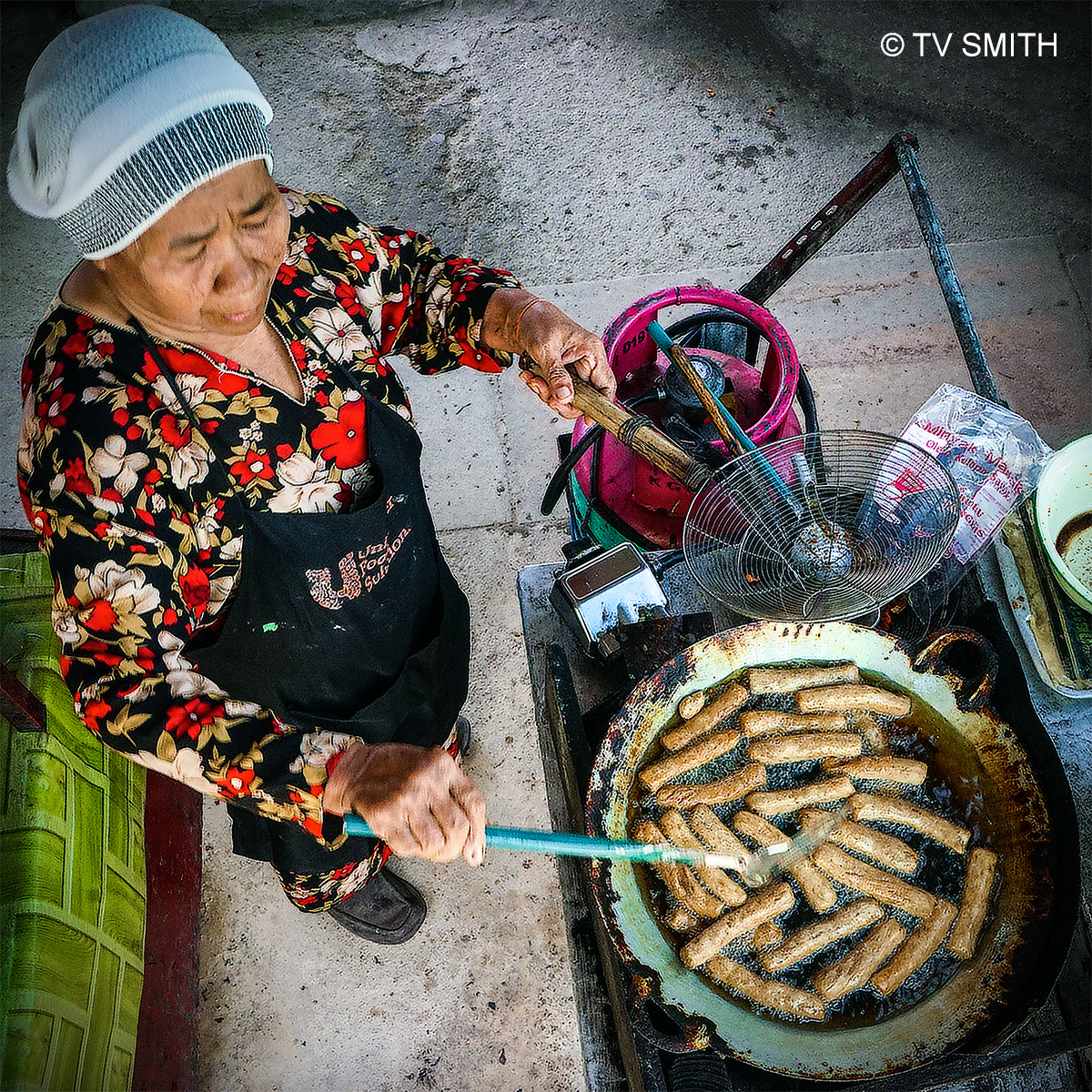
The Kopitiam Pasta

I think it was Alisan coffee shop in the Masjid India area that pioneered the food court within a kopitiam. That was in the early 1980s and the concept has since been adopted by many Chinese coffee shops. The big and popular ones may squeeze as many as two or three dozen food stalls into a single shop lot.

Currently, one of the less common types of food served at such places is pasta. With the new burden of GST and the Shringgit (a term attributed to my friend Sidek Kamiso), the poor man’s Italian dining should become more popular.

If you are not a snob, this Seafood Pasta is good value as the portion and ingredients are generous at RM 9 nett. Of course, it won’t taste as good as that from an Italian chef who hand craft his pasta and blend the sauce from some time-tested family recipe.

Nevertheless, I like that I can customise it in whatever way I want at the kopitiam. No snooty chef or maitre d’ protesting because it is heresy to even suggest.

The fat Chinese cook here nodded his head happily when I requested a tomato-based sauce even though it is served dry.

I also like that I can order a barley drink to go with it and have dessert of Nyonya Kuih Lapis bought from another stall outside.

The coffee shop is at one corner of Jalan SJ6, Selayang.

Sony Alpha a7R, ISO 320, f6.3, 1/250 sec.
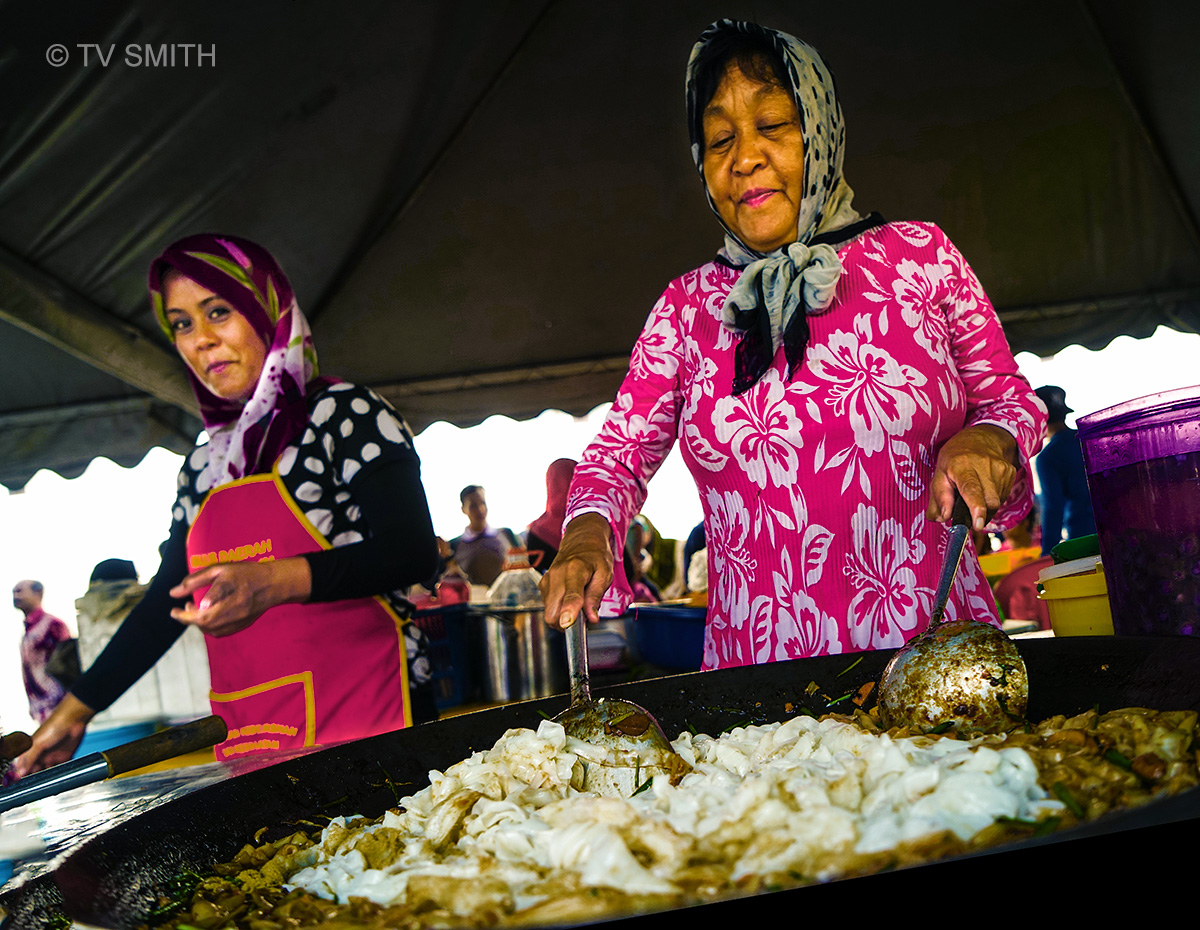
On The First Day Of Ramadan

Was good spending the first day of the fasting month observing life in Slim River. The day culminated at the Ramadan food bazaar in the middle of town.

The traders were friendly, generous and their food tasted good. A mother-daughter team seen here selling stir-fried kuey teow (flat rice noodles).

I like how the daughter sneaked in a smile behind the serious mother 🙂

Sony Alpha a7R, ISO 320, f4, 1/250 sec.

Chilling With Makcik Hasiah

Was exhausted after a long hard day exploring the railway area of Behrang. Thus was happy to see a roadside hawker stall serving cold drinks and food. Also a good place to rest and check accumulated messages on my phone, I thought.

Makcik Hasiah, the elderly stall owner, asked me if I came for the lekor. It is east coast fish crackers made from fish and sago flour. It wasn’t ready at the time I arrived.

I told her I came for a cold drink. She said whenever a non-Malay come to her neck of the woods, it must be for her lekor.

Me: Wah! It must be good then?
She: But of course! Muahahaha.

We then went on to joke about so many random things, exchanged anecdotes and laughed ourselves silly. I called her aunty. She’s like an own aunt: motherly, wise, caring, honest and funny.

Me: How many grandchildren do you have?
She: Make a guess.
Me: 10?
She: 27!
Me: Wah! (clasping my head in mock disbelief)
She: Why? But I have 8 kids. Hahaha.

Funny how two strangers from different worlds can connect even with nothing in common, except maybe for the slightly twisted sense of humour and good vibes.

I ended up not looking at my phone at all. When you have good company, you won’t even realise you have a phone. I bid farewell and packed some lekor to go.

She: Will you be back soon?
Me: I am afraid not. Will you miss me so soon?
She: No. Hahaha. I want to see the prints of the pics you took of me.

I should get a battery-operated printer soon.

Sony Alpha a7R, ISO 800, f13, 1/60 sec.

Mee Hoon Kueh

Behrang is essentially a Hokkien town. Where Hokkiens ( 福建话 – Fujian people) live, you will find authentic Mee Hoon Kueh in eating places. By chance, I discovered one of the best here. Mee Hoon Kueh is similar to the Hakka hand-pulled “pan mee” or flat flour noodles.

Instead of noodle strips, the flour dough is delicately hand-kneaded with egg and oil into bite-size pieces. It is then brought to a simmer in a broth of ikan bilis (anchovies), pork balls, pork belly slices and sawi (mustard greens). It takes time to cook the dish as you can’t hurry love.

Good thing the boss of Vivian, the Indonesian cook, is always busy with mahjong. She learned the craft, refined it and now makes one of the most awesome mee hoon kueh I ever tasted. She said she might set up a stall back in Surabaya when she retires.

‘Mee Hoon Kueh’ is usually pronounced as ‘Mee Hoon Ker’ outside Penang and the north.

Sony Alpha a7R, ISO 500, f4, 1/80 sec.

Yik Mun’s Hainanese Chicken Chop

Yik Mun kopitiam in Tanjung Malim was a popular stopover during the heydays of Federal Route 1. The Chinese steamed buns shop was an institution.

Now run by third generation descendents, the restaurant is located outside the old town. A shophouse factory in town churns out the assembly-line buns. They are no longer hand-made.

I didn’t order their famous pau (steamed bun) this time. It tasted lousy on a previous visit. Fortunately, the shop sells other local food including the famous Malaysian invention; the Hainanese Chicken Chop.

I am a bit OCD when I see salad dressing carelessly splashed all over the dish. The Hainanese chicken chop’s gravy is a speciality by itself. Typically, it has oyster sauce, HP sauce, Worcestershire sauce and blended secret ingredients in it. It must not be contaminated with Thousand Island dressing.

That aside, the chicken chop here tasted “so so” and the portion seems to have gotten smaller. At RM 14 ++, it is not cheap for a small town.

Nevertheless, the shop was packed when I was there. I guess a good reputation from the past can go a long way. Try it yourself and let me know what you think, if you are in town. Yik Mun is Halal.

Sony Alpha a7R, ISO 1000, f4, 1/60 sec.