ABC

Known was Air Batu Campur (mixed ice) or ABC locally, the icy dessert is found across Southeast Asia in different variations. Hitz Cafe of Tanjung Malim serves the traditional Malaysian and Singapore version.

It is shaved ice with assorted jellies, beans, nuts, maize, sago seeds, topped up with evaporated milk and rose syrup. Ask for ice cream, if you fancy.

ABC is also Michael Jackson’s monster hit when he was 11. I can’t remember if he sang ‘ABC’ in his 1996 concert in Malaysia but I still wonder if he had ABC during his stay here.

Sony Alpha a7R, ISO 100, f4 1/125 sec.

Shaved Ice And Light

Iced dessert from Kak Jah’s Cendol stall in front of the post office in Kuala Kubu Bahru. I poured Nescafe Ice into a take-away pack and it tasted pretty cool.

Photography Tip: It is possible to do nice food photography at a roadside hawker stall. It can be done without any additional equipment but it requires a systematic approach.

Survey the ambient light before finding a seat. Note the direction of light, plus the shadows and highlights it will cast. Then, choose a table and seating position in relation to that.

Travel food photography is not about climbing on a chair (blogger-style), taking a overhead shot and tagging it as #foodphotography.

It entails an understanding of light that you cannot control. Harness the existing ambient light and use it to shape the food or to highlight its textures.

What if the light is really bad? Don’t bother, then. Just enjoy the food. There are no laws compelling you to post every meal you had.

Sony Alpha a7R, ISO 100, f4, 1/320 sec.

Teng Wun

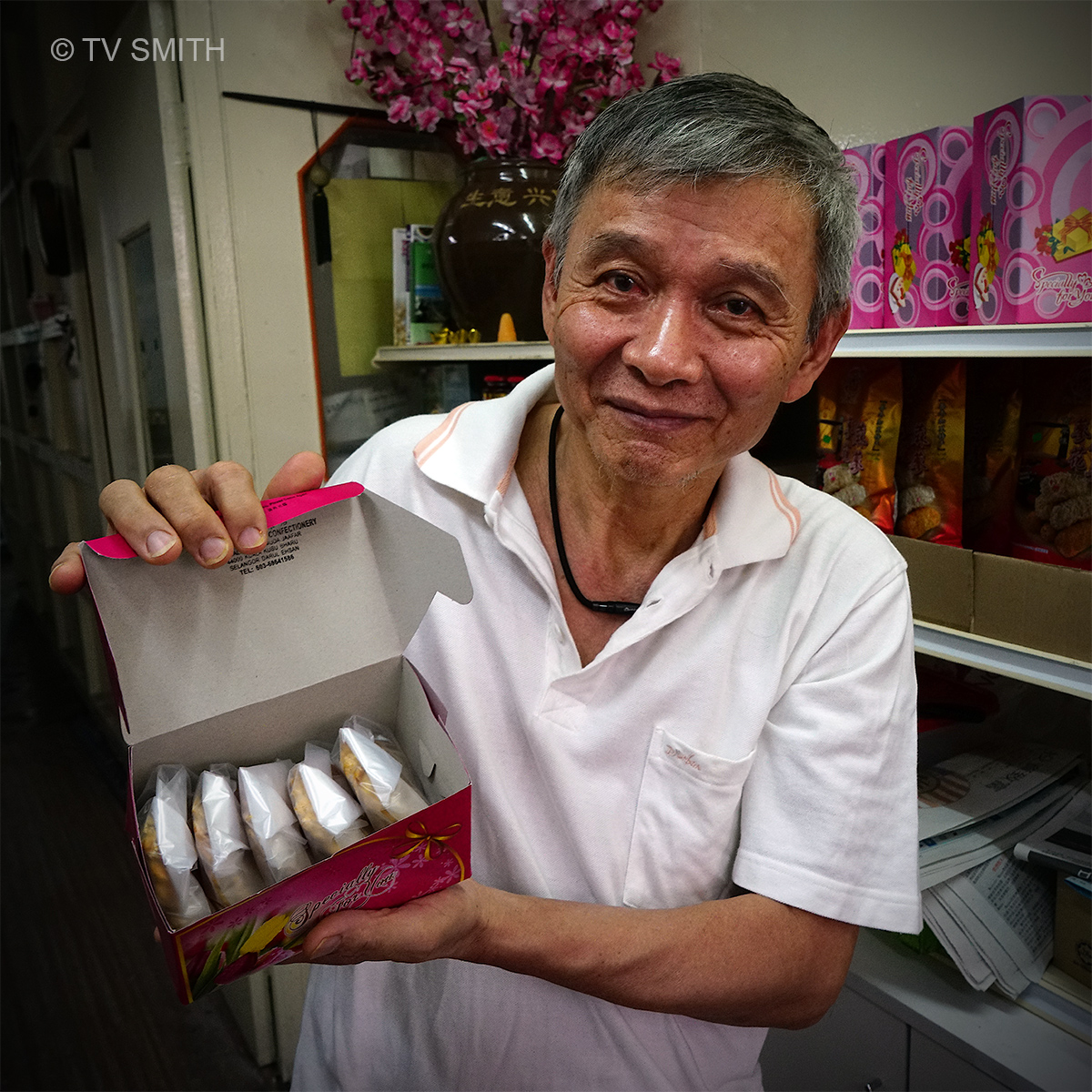
Mr Wun the baker and proprietor of Teng Wun Cake Shop, together with his wife, are making 400 to 500 pieces of kaya puffs a day, and were doing so for the last 30 years or so.

Quite an amazing number considering there are not that many residents, let alone tourists in KKB. Many of his customers are locals, including Indians, Malays and Orang Asli folks.

Kaya, also known as coconut custard is of Peranakan origin and not Hainanese, I believe.

Local Hainanese people (originally from the Island of Hainan in South China) are known for their culinary skills, especially fusion food of East and West.

Chicken chop and kaya-butter toasts are Malaysian-Hainanese inventions. Many also used to work on the trains’ (KTM) catering coach and operate kopitiam (coffee shops) around the country.

Another Hainanese in town proffered a theory as to why they are good cooks. They were latecomers to then Malaya. They came after the earlier wave of migration by the Hokkiens, Cantonese, Teochews and Hakkas. By the time they arrived, all viable business opportunities and job openings were controlled by powerful clans and triads.

Without a membership card, they ended up working for English expats (wealthy colonialists) as cooks and caretakers of mansions. Here at KKB, several Hainanese residents and their ancestors used to work at the colonial bungalows up on Fraser’s Hill.

It was from the British families that they were introduced to western food and they soon enhanced the recipes further by adding Chinese touches. It is also claimed that they modified a kebab leftover from a garden party one night and added peanut sauce.

The creators named it “Sar Tay” meaning ‘three pieces’ in Hainanese, and voilĂ !; satay was born. Most likely an urban legend but quite possible considering their inventive kitchen skills.

Back to Mr Woon. His shop also sells the famous kaya by itself in small jars. The spread used on bread is thinner than the kaya used for the puffs. Mr Woon says a thicker version is used in the puffs so that is easier to wrap the skin around.

The nice gentleman offered me some complimentary butter sponge cakes to try. I turned that down to leave tummy room for the puffs. Yes. They are the world’s most awesome kaya puffs.

Sony Alpha a7R, ISO 2000, f9, 1/60 sec.

Yellow Noodles On A Red Brick Road

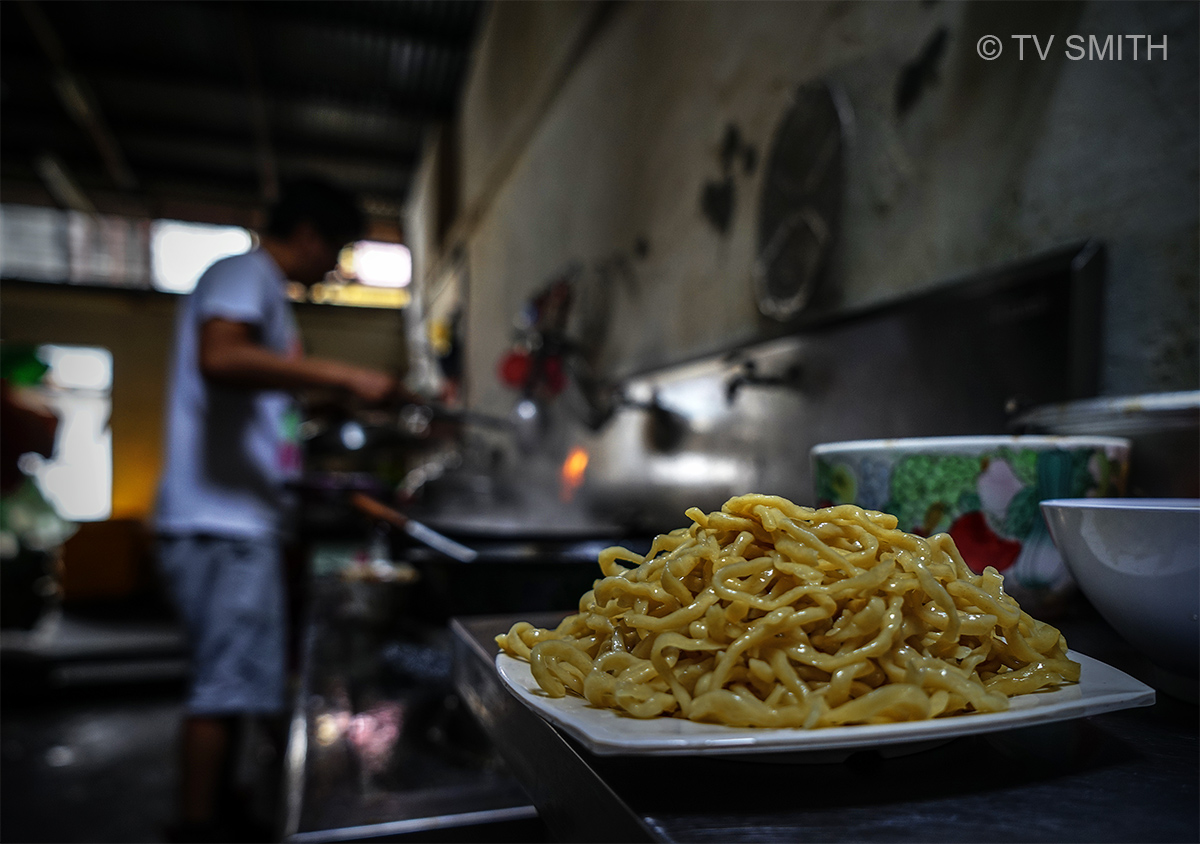
I’m still in Kuala Kubu Bharu town and at a shop famous for Ulu Yam ‘Lor Mee’. It is a Hokkien dish of yellow noodles cooked with a thick gravy of corn starch, spices, meat and eggs. It also tastes sour as vinegar is added for the distinctive flavour. What is special about authentic Ulu Yam Lor Mee?

The yellow noodles are hand made or hand-pulled. According to chef and owner Lim Kwee Hock there is no artificial colouring, flavouring, preservatives nor is brine added. Brine creates the familiar love or hate pungent smell.

Now that you know, you may want to check out Restoran Xin Yuen Kee (non-halal) when you are in Kuala Kubu Bharu town. Lim’s grandfather opened the first restaurant in Ulu Yam Lama. A 2nd generation successor opened another shop in Batang Kali. Their grandson is operating this outlet in KKB.

It is not that common to see a third generation descendent interested in a family business enough to inherit the recipes and to cook. Young Lim and his wife Elaine operates this simple eatery by themselves. The Lor Mee and other dishes taste very good and prices are reasonable.

Photography Tip: Sometimes, the best food shots aren’t just on the table. Ask for permission and go for some unconventional or less seen angles in the kitchen. Traditional Chinese kopitiam kitchens are usually dark, moody and full of character.

Sony Alpha a7R, ISO 320, f4, 1/60 sec.

Ulu Yam In A Nutshell

Chinese folks from elsewhere go to the Ulu Yam area for one main reason. To try the famous Hokkien ‘lor mee’ there. It is a dish of yellow noodles cooked in a sourish vinegar broth. Although the dish originated in Ulu Yam Lama, several other restaurants at Ulu Yam Bharu serve it.

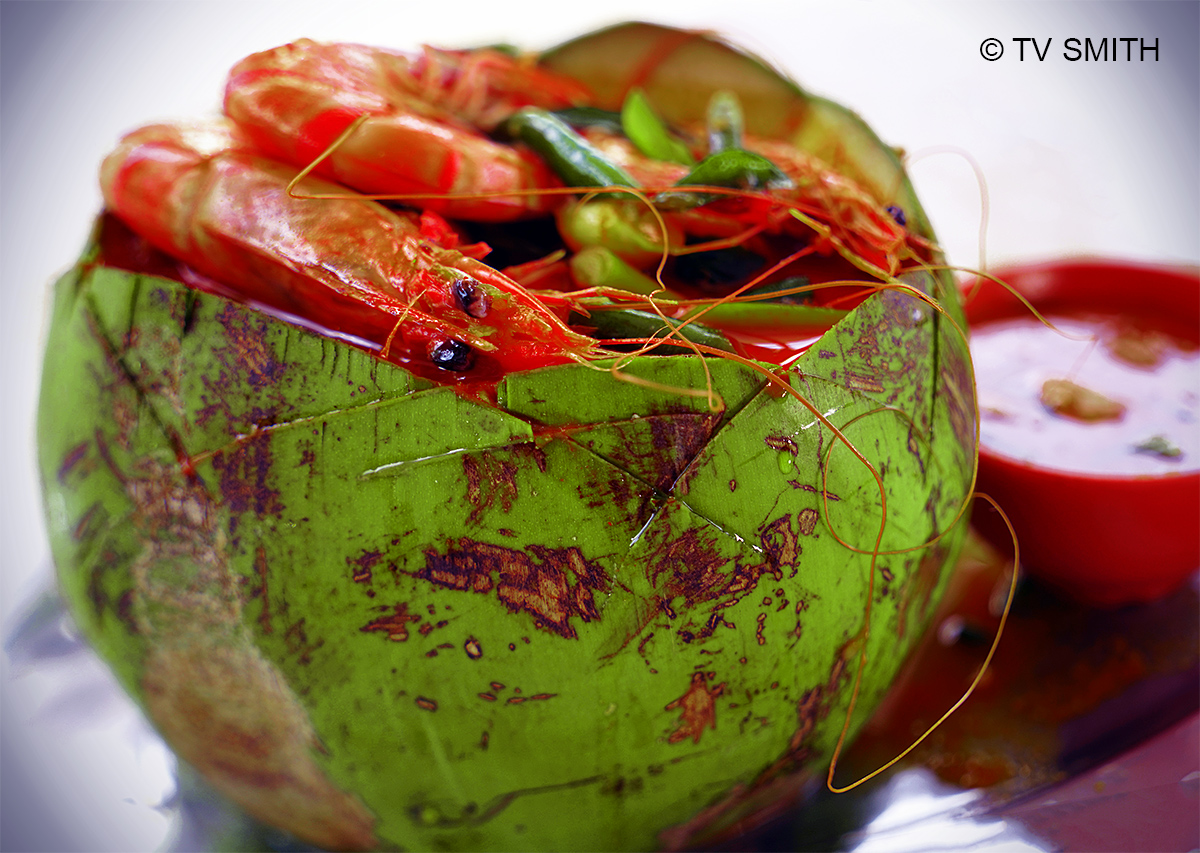
Apart from the now third-generation original shop in Ulu Yam Lama, the other popular ones are Aik Koon and Hock Lay in Ulu Yam Bharu. The former was closed when I was in town looking for food, so I settled for the latter. Fermented acetic acid isn’t exactly my cup of tea; so I asked for another recommendation besides lor mee. The head waitress suggested their signature dish of Shrimps In A Coconut, which she claimed is their creation.

The prawns are cooked in coconut juice (coconut water) and not santan (coconut milk). As a result, the mild curry prawns have a very distinctive fragrance and unique sweet taste. It comes with a tom yum-like dip that is spicy and sour. Excellent fare and reasonable pricing from Hock Lay Restaurant.

Waitress is also talkative, informative and cooperative. She helped me move my food and gear to a darker and cooler corner after I finished photography at a brighter side. Although this dish has no pork in it, the restaurant is not halal. Sony Alpha a7R, ISO 100, f4, 1/250 sec. The nearest decent hotel is The Leverage Business Hotel in Rawang. Available from MyCen Hotels at http://www.mycen.my/