Nasi Goreng U.S.A.

I always thought the fried rice has some kind of American influence. Indeed it has a fascinating history and is crossover food.

The common explanation and assumption is that the U.S.A. abbreviation stands for Udang (Shrimps), Sotong (Squid) and Ayam (Chicken). There’s also an omelette on top or wrapped around the fried rice.

Its real origin or influence ought to be the American Fried Rice (ข้าวผัดอเมริกัน) dish, invented by the Thais during the Vietnam War.

It has American side ingredients like fried chicken, omelette, hot dogs and ketchup. The Americanization of the spicy Thai fried rice was to cater to American soldiers stationed in Thailand during the war.

Today, it can be found in the menu of Thai restaurants in the States and is listed as “Khao Pad American”.

Not surprisingly, many Tom Yam and Nasi Pattaya stalls serve this dish here. Locally, this is a dish where no two restaurants serve it the same way.

This one is from Restoran Studio 5 in Ampang Jaya. Even the 3 chefs in the 3 shifts here, cook it differently. Show this pic if you want the same version.

Sony Alpha a7R, ISO 1600, f13, 1/80 sec.
Chwee Kueh

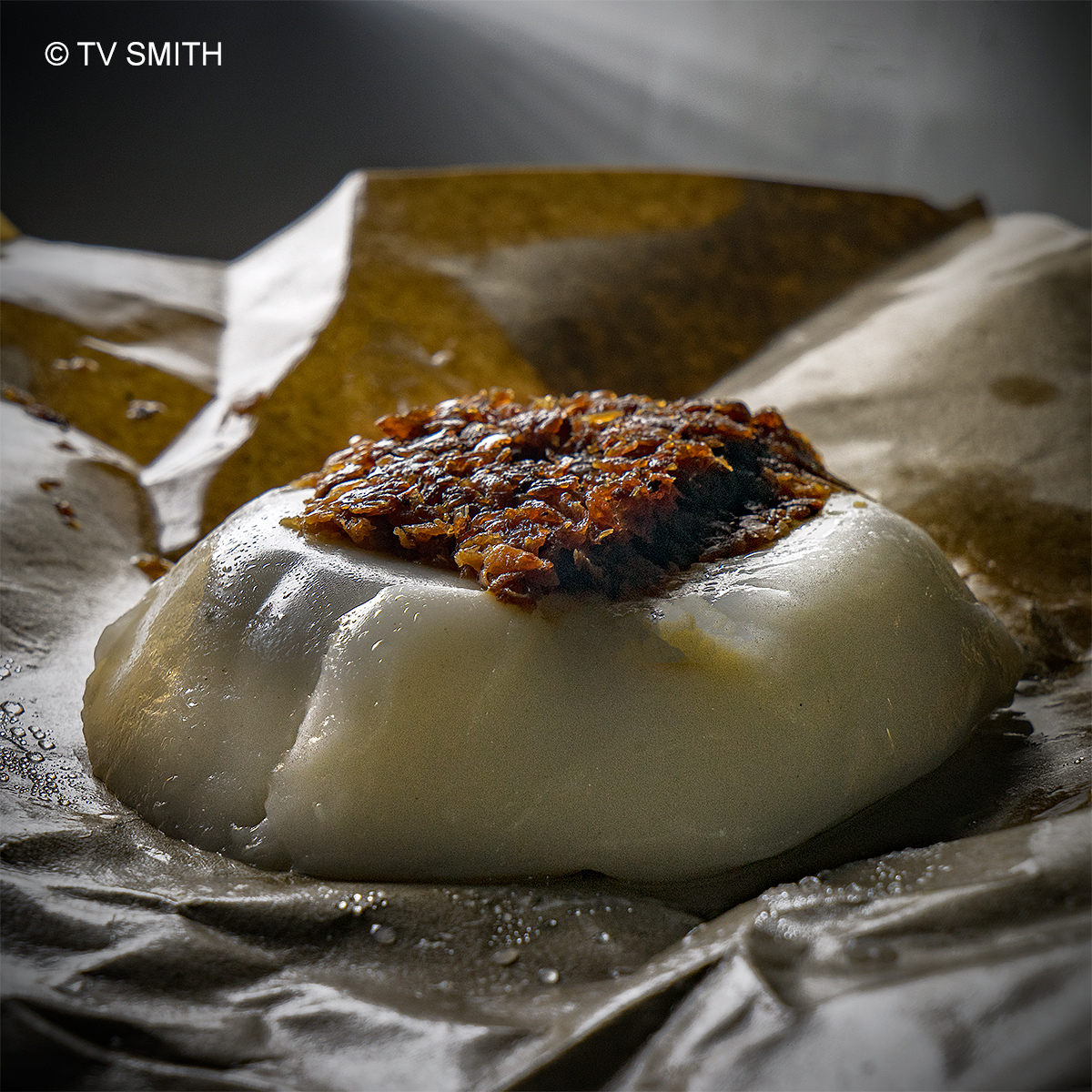
Chui Ker (Hokkien) or Woon Chai Koh (in Cantonese) is rice flour cake steamed in metal cups or bowls. The rice pudding is then topped up with ‘Chai Por’.

The toppings of Chai Por is preserved and fried radish (lobak) chopped into bits with sesame oil and soy sauce added. Chili sauce is optional.

It is takeaway or street food that should be eaten on the wax paper it comes wrapped in.

The exact recipe varies. Some use shallots or turnip, some add dried shrimps (heh bi) while others soak the toppings in a special oil concoction.

For the rice flour, some mix it with potato flour to enhance the texture and smoothness.

As such, chui kueh from different stalls never taste the same and the satisfaction varies greatly. If you find a good hawker selling it, pray it stays.

It is a dying traditional Chinese breakfast snack and is not as easy to find these days. Chui Ker is more popular in neighbouring Singapore where it is spelled and pronounced as chwee kueh.

Sony Alpha a7R, ISO 800, f14, 1/80 sec.

Macro At The Night Market – Putu Mayam

Outdoor macro is hard enough in the daytime with a close-up lens’ extreme shallow depth-of-field. It requires very precise focus. At night, at the pasar malam, it can be a nightmare.

I not only need to light the subject but also to handle the side effect of a curious crowd attracted to the lights like moths to a flame.

Is a challenge but doable if you can find a stall with tables. The ‘assam laksa’ stall usually has some tables and chairs to dine in. They won’t mind you shooting other food there provided you order from them, and explain what you are going to do.

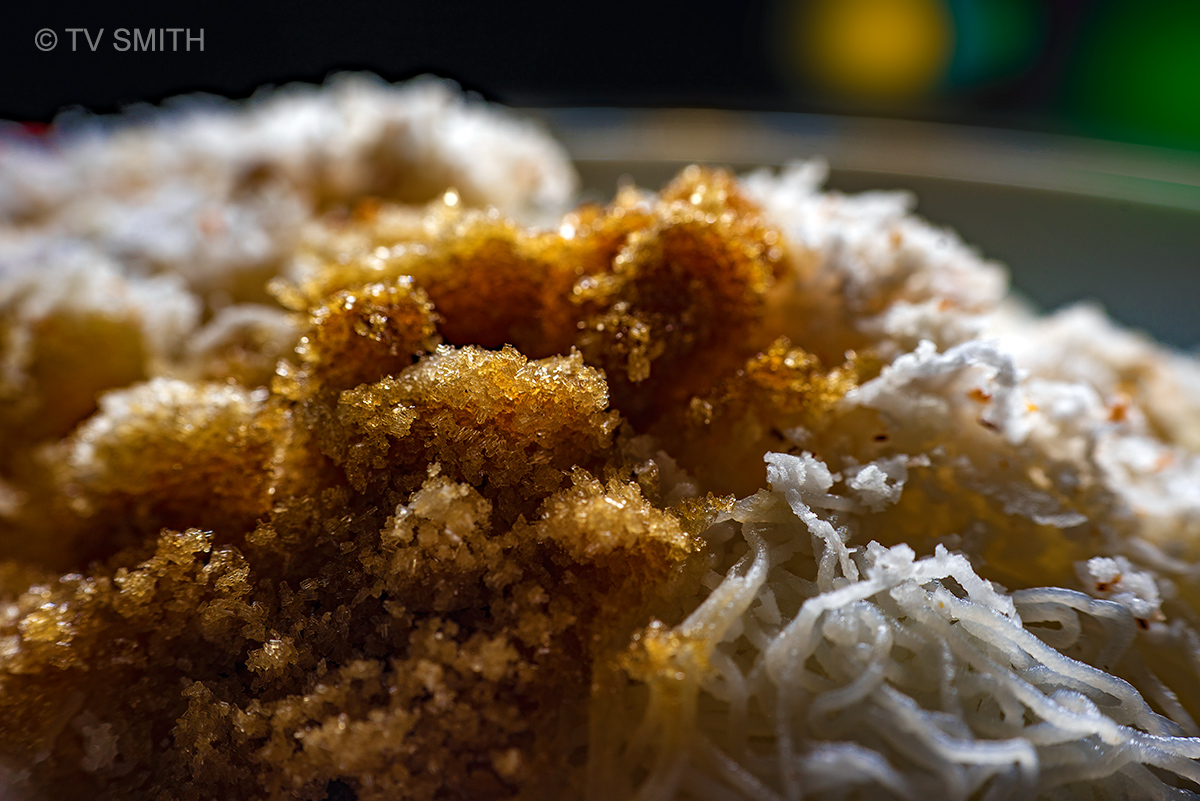
Putu Mayam is the popular Indian vermicelli dessert made from rice flour, steamed with coconut milk and fragrant pandan (screwpine) flavoring. The string hoppers are eaten with grated coconut and golden (gula melaka) coconut palm sugar.

Because the ingredients are nicely textured, the aim was to light it in such a way to create dimension while highlighting the textures of the coconut shavings and golden sugar crystals.

Two Litepanels units were deployed.

Sony Alpha a7R, ISO 100, f9, 1/60 sec.

Lemang

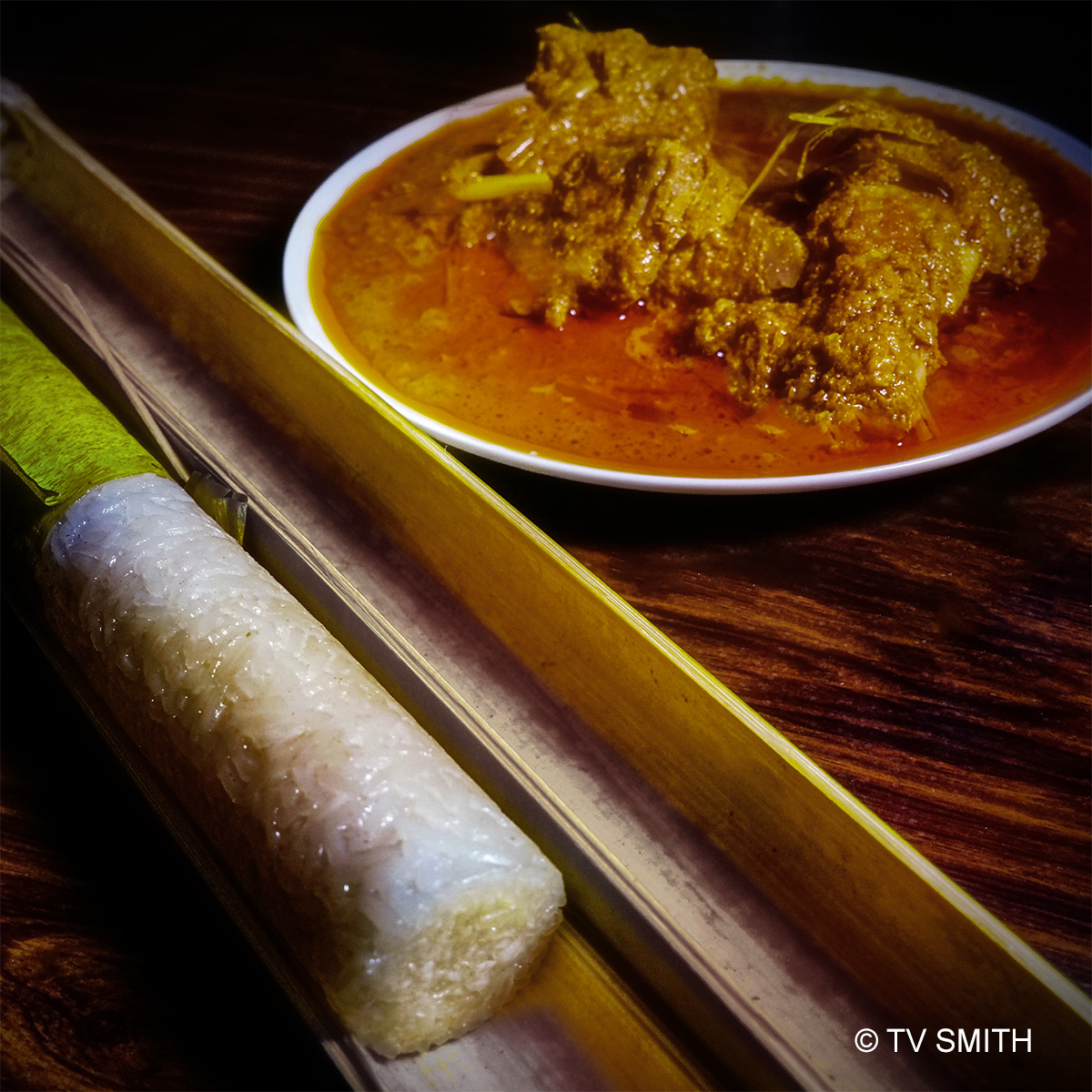
To add a little explanation for international followers; the delicious dish known as Lemang is believed to be Minangkabau (Indonesian) in origin.

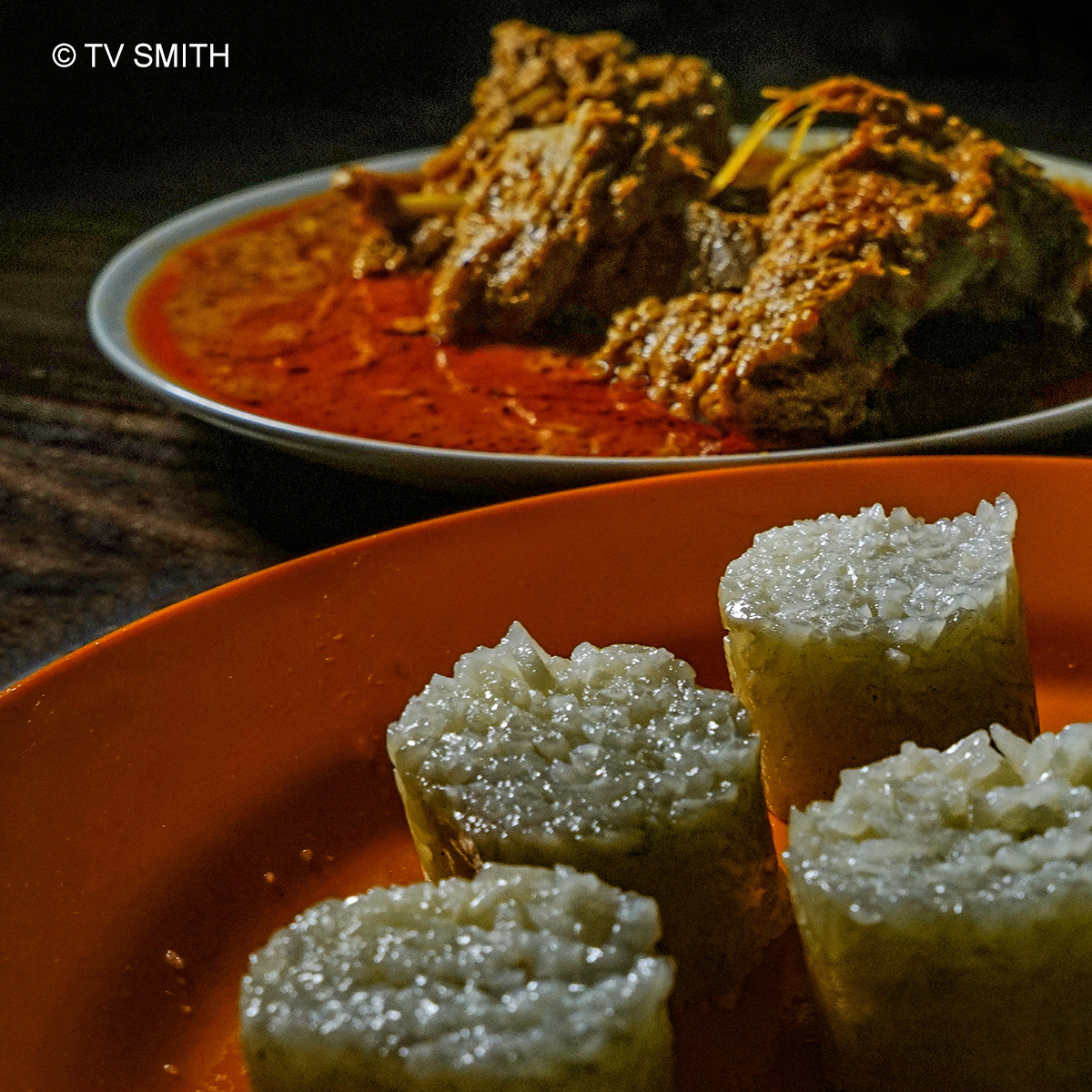
The glutinous or sticky rice is mixed with coconut milk and a little salt. It is then wrapped in banana leaves and cooked over fire in a hollowed-out bamboo tube.

In Malaysia, Indonesia and Singapore, one can see stalls popping up during the Eid al-Fitr Festival, where the delicacy (including the accompanying curry) is cooked and sold from the roadside.

Lemang (pronounced as Ler Mung in Malay) is also a traditional and festive food for the Dayaks and Ibans of Borneo.

Sony Alpha a7R, ISO 800, f9, 1/160 sec.

Nom Nom Yum Yum

Split open the bamboo tube, cut up the sticky rice and pour curry over it. Heavenly.

Sony Alpha a7R, ISO 2500, f9, 1/160 sec.